THC, short for tetrahydrocannabinol, is the main psychoactive compound in cannabis and the reason it produces a high. Understanding what THC actually is, and how it works once it enters the body, explains far more than just why people feel euphoric. It also sheds light on effects that reach into mood, appetite, pain, sleep, and even metabolism. This guide breaks down what THC is and how it works in the body, starting with the system that makes all of it possible.
What Is THC and How Does the Endocannabinoid System Process It?
THC works because your body already has a built in system designed to respond to cannabinoid compounds. This is called the endocannabinoid system, or ECS, and it helps maintain balance, known as homeostasis, across functions like mood, appetite, pain sensitivity, sleep, and how your body stores fat and burns calories.
When THC is consumed, it binds to two main types of receptors in the ECS, known as CB1 and CB2. CB1 receptors are concentrated in the brain and central nervous system, which is why THC produces psychoactive effects. CB2 receptors are found more broadly throughout the immune system and peripheral tissues, which helps explain THC’s influence on inflammation and pain. Once THC attaches to these receptors, it changes how nerve cells communicate, and that shift in communication is what drives nearly every effect associated with cannabis use.
With the receptor system explained, the next question is what actually happens in the brain once that binding takes place.
How THC Affects the Brain and Mood
Once THC binds to CB1 receptors in the brain, it alters the release of neurotransmitters like dopamine, which is part of why users often report feelings of relaxation, euphoria, or altered perception of time. This same mechanism is behind some of the less pleasant effects too, including short term memory disruption, slower reaction time, and in higher doses, anxiety or paranoia in sensitive individuals.
These brain level effects do not stay isolated to mood and cognition. Because the ECS is so deeply tied to the body’s regulatory systems, THC’s influence extends outward into physical processes as well, including one that gets a surprising amount of attention: metabolism.
Does THC Really Affect Metabolism?
Emerging research has suggested a potential link between regular THC use and metabolic markers. Some studies comparing cannabis users to non-users have found lower fasting insulin levels and smaller waist circumferences among regular users, an unexpected pattern given that THC is also known to increase appetite.
Other observational research has shown that despite increased calorie intake from the munchies, many cannabis users have lower body mass indexes than non-users. This paradox has fueled curiosity about whether THC plays a genuine role in weight and metabolic regulation, or whether other factors are doing the heavy lifting. The answer likely depends on your own baseline metabolic profile, which is part of why identifying your individual metabolic type matters before drawing conclusions from population level data. It is a similar question to ones raised around other substances, including whether stimulant medications influence resting metabolic rate in comparable ways.
To understand why this pattern shows up, it helps to look at the specific mechanisms researchers believe are involved.
Reasons Why THC Might Influence Metabolism
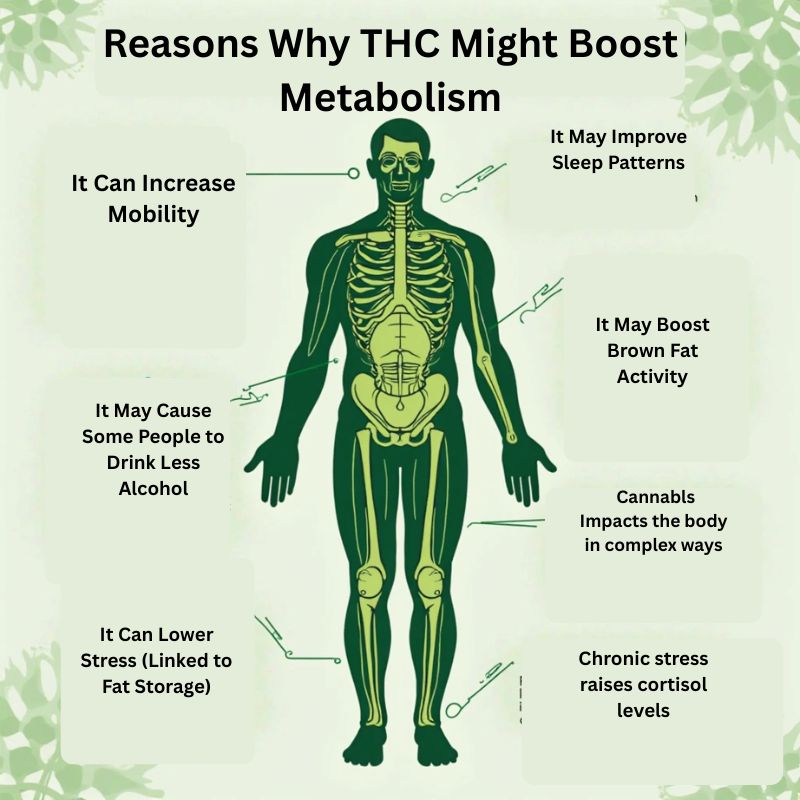
Cannabis affects the body through several overlapping pathways, and researchers believe a handful of them contribute most to its metabolic effects.
It Can Increase Mobility
For individuals with chronic pain or inflammation, THC may promote movement by easing discomfort, indirectly boosting caloric burn through increased activity. Building on that, staying consistent with something as simple as a daily walking habit can compound this effect over time.
It May Cause Some People to Drink Less Alcohol
Some users substitute alcohol with cannabis, reducing their intake of calorie rich beverages. This caloric deficit may influence weight changes over time, independent of any direct metabolic effect from THC itself.
It Can Lower Stress, Which Is Linked to Fat Storage
Chronic stress raises cortisol levels, which can promote fat storage, especially around the abdomen. THC’s anxiolytic, or anti-anxiety, properties may help reduce cortisol, potentially aiding fat metabolism. For a non-cannabis approach to the same pathway, breathing techniques used for stress relief work on cortisol through a comparable mechanism.
It May Improve Sleep Patterns
Restorative sleep plays a central role in metabolic health. THC may help some individuals fall asleep faster or stay asleep longer, which can positively affect metabolic function. The same outcome, better rest and steadier metabolism, is achievable without cannabis by focusing on improving sleep quality through natural habits.
It May Boost Brown Fat Activity
Brown adipose tissue, often called brown fat, burns calories to generate heat rather than storing energy the way white fat does. Some early research suggests cannabinoids can activate brown fat, which would support a modest metabolic boost, though this area still needs far more study before any firm conclusions can be drawn.
None of these mechanisms operate in isolation from THC’s most well known effect, the one most people associate with cannabis use in the first place.
What About the Munchies?
The most well known side effect of THC is increased appetite, commonly called the munchies. THC stimulates the release of ghrelin, the hunger hormone, which drives cravings, often for high carbohydrate, energy dense foods.
While THC might modestly speed up metabolism in some people, this effect can easily be canceled out by overconsumption during a munchies episode. The net effect on the body depends heavily on the balance between energy intake and expenditure, which is part of why leaning on a structured, anti-inflammatory eating pattern can help offset craving driven overeating.
Different cannabis strains also produce noticeably different effects on appetite and energy, and it helps to know the general pattern before assuming all cannabis behaves the same way in the body:
- Sativa strains: more energizing, may promote movement and alertness
- Indica strains: sedating, can promote rest and hunger
- Hybrids: vary based on genetic lineage and cannabinoid content
Given how much appetite and metabolism come up together, it is worth addressing the weight loss question directly.
Does THC Help With Weight Loss?
While some evidence shows that cannabis users tend to weigh less on average than non-users, this does not mean THC functions as a weight loss solution. A lower average BMI in this population may be tied to broader lifestyle factors or strain specific effects rather than THC acting alone.
It is also worth separating weight loss, an overall reduction in body mass, from fat loss, a targeted reduction in body fat specifically. THC might affect appetite and fat metabolism to some degree, but its effectiveness as a genuine fat burning agent remains unproven and should not be treated as established fact.
As with most substances that interact with body systems this broadly, THC does not come without trade offs.
Potential Side Effects and Considerations
Like any substance that interacts with the body’s regulatory systems, THC carries risks, especially with long term or high dosage use.
- Unhealthy eating habits driven by cravings
- Cognitive effects such as memory impairment or reduced focus
- Potential dependency or psychological reliance
- Legal issues depending on your location
- Tolerance buildup, which reduces its effects over time
THC also affects individuals differently. Age, gender, baseline metabolic rate, and pre-existing conditions all play a role in how the body responds, which is exactly why generalized claims about THC’s effects should be treated with some caution. If your focus is genuinely on supporting a healthy metabolism, there are more reliable places to start.
Safer Ways to Support Metabolism Naturally
Whether or not THC plays any meaningful role for you personally, the proven ways to support a healthy metabolism remain the same and do not carry the same trade offs.
- Strength training and HIIT workouts, including metabolic resistance training routines
- Planning balanced, high-protein meals ahead of time
- Proper hydration throughout the day
- Sleep optimization and consistent rest schedules
- Yoga poses that ease everyday stress
- Green tea, caffeine, or L-carnitine supplementation
THC may complement some of these strategies indirectly, through better sleep or lower stress, but it should never replace them as the primary approach. With the practical side covered, it is worth stepping back to see where expert opinion currently lands on all of this.
Expert Opinions on THC and the Body
Health professionals remain cautious on this topic overall. Most agree that while cannabis may support metabolic balance in some indirect ways, through sleep, pain relief, or stress reduction, more robust, large scale studies are still needed before any confident claims can be made about THC and metabolism specifically.
Some experts argue that the benefits observed in regular THC users could stem entirely from these secondary factors, improved sleep, pain relief, or better stress management, rather than from any direct increase in metabolic activity. It is also worth noting that no regulatory health authority currently approves THC for weight loss purposes.
Final Verdict: What Does THC Actually Do in the Body?
THC works by binding to CB1 and CB2 receptors throughout the brain and body, which explains its wide reaching effects on mood, pain, appetite, sleep, and possibly metabolism. Some evidence suggests THC could modestly influence metabolic markers through appetite regulation, stress reduction, and increased activity, but its effects vary widely between individuals and are frequently counterbalanced by increased calorie intake.
For readers who want to keep building a clearer picture of how everyday habits shape long term health, exploring holistic approaches to overall wellness is a reasonable next step.
Frequently Asked Questions
1. What is THC and how does it work in the body?
THC is the main psychoactive compound in cannabis. It works by binding to CB1 and CB2 receptors within the endocannabinoid system, altering nerve cell communication and influencing mood, appetite, pain, sleep, and metabolic function.
2. Does THC increase fat burning?
Some early studies suggest THC can activate brown fat, which burns calories to generate heat. However, clinical evidence remains limited and this effect should not be relied on for weight management.
3. Can smoking weed help you lose weight?
It may indirectly help by reducing stress and improving sleep, both linked to better metabolism, but the increased appetite associated with THC can easily cancel out any potential benefit.
4. What strains of cannabis are more likely to affect metabolism?
Sativa strains, especially those higher in limonene or pinene, tend to support alertness and activity, which may indirectly aid metabolism more than sedating indica strains typically do.
5. Why does THC cause the munchies?
THC stimulates the release of ghrelin, the hormone responsible for hunger signals, which is why users often experience strong cravings, particularly for high-carbohydrate, energy-dense foods.
6. Is THC approved for weight loss or metabolic treatment?
No. THC is not currently approved by any major health authority for weight loss or metabolic treatment. Any effects on metabolism are considered secondary and are not clinically established as reliable outcomes.
7. What factors affect how THC influences an individual’s body?
Age, gender, baseline metabolic rate, tolerance level, and pre-existing health conditions all influence how a person’s body responds to THC, which is why its effects vary significantly from person to person.