In today’s fast-paced world, mastering your time isn’t just about getting more done, it’s about living with purpose and balance. Effective time management allows you to work through self-doubt while making real progress, reduce stress, and boost overall productivity. Whether you’re a student, entrepreneur, or working professional, these time management tips for self-growth and productivity will help you make every hour count.
Time Management Tips
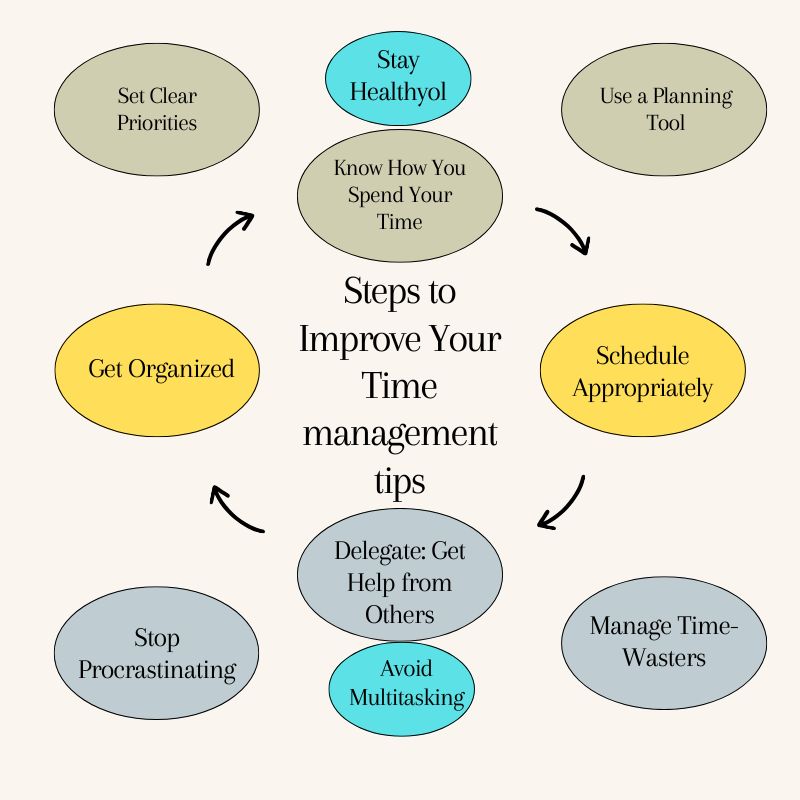
1. Know How You Spend Your Time
The first step toward effective time management is awareness, since it’s hard to fix a schedule you haven’t actually looked at closely. Track your daily habits that shape your routine for a week, noting how much time you spend on work, social media, chores, and rest.
Use tools like RescueTime or Toggl Track to get insights. Once you identify time-draining tasks, you can adjust your schedule to align with your goals. A regular self-reflection habit transforms wasted hours into opportunities for growth.
2. Set Clear Priorities
Not all tasks deserve equal attention. Use the Eisenhower Matrix to categorize your activities:
- Important and urgent: Do immediately
- Important but not urgent: Schedule it
- Urgent but not important: Delegate
- Neither: Eliminate
By focusing on what truly matters, you prevent burnout and align your daily routine with your long-term vision for self-growth and productivity.
3. Use a Planning Tool
A written plan tends to hold up far better than a mental one. Digital calendars and task managers like Google Calendar, Notion, or Trello help you organize and visualize your week. Plan your day each morning or the night before, adding deadlines, reminders, and even dedicated focus time slots.
A planning tool doesn’t just structure your day, it builds the discipline to stay consistent and accountability, both key traits for success in personal and professional relationships.
4. Get Organized
Clutter, whether physical or digital, drains the mental clarity you build each morning. Start by cleaning your workspace, labeling folders, and minimizing distractions.
Organize your digital life too: sort files, clear your inbox, and maintain to-do lists. A structured environment helps your brain stay calm, improving clarity, focus, and emotional balance throughout your day.
5. Schedule Appropriately
Everyone has different energy peaks throughout the day, and working against your own rhythm makes every task feel harder than it needs to be. Schedule demanding tasks, like studying or strategy work, during your peak energy hours, and save routine tasks for when your energy dips.
Use the Pomodoro Technique, 25 minutes of focus followed by a 5-minute break, to maintain rhythm and prevent fatigue. Goal-driven scheduling built around SMART criteria helps you work with your energy, not against it.
6. Delegate: Get Help from Others
Delegation isn’t a weakness, it’s a skill that most productive people had to learn deliberately. Whether at home or work, identify tasks that others can handle efficiently. Delegating frees up your time for higher-value activities that contribute directly to your goals and growth, and it also builds trust and teamwork, both essential for long-term productivity.
7. Stop Procrastinating
Procrastination often comes from fear of failure or perfectionism rather than laziness. Break big goals into small, actionable steps and reward yourself for completing each one. Try the 2-minute rule: if something takes less than two minutes, do it immediately.
Small wins that build confidence over time create momentum, and consistency becomes the foundation of self-growth.
8. Manage Time-Wasters
Distractions rarely announce themselves as distractions until you’re already deep into one. Identify the usual suspects, whether that’s social media, excessive emails, or multitasking, and set limits. Consider digital detox hours or productivity apps that block distractions during focus time.
Remember: productivity isn’t about doing more, it’s about doing what matters most. When you protect your time, you protect your growth.
9. Avoid Multitasking
Despite its popularity, multitasking reduces efficiency and increases stress rather than saving time. Instead, try single-tasking: focus on one task at a time until completion. It improves concentration, accuracy, and satisfaction.
You’ll not only get more done but also feel more present and mindful throughout the day.
10. Stay Healthy
Time management and health are deeply connected, more than most productivity advice gives credit for. Good sleep, balanced nutrition, and regular exercise keep your brain sharp and your body energized.
When you’re well-rested, you make better decisions, manage stress effectively, and sustain focus. Healthy habits amplify productivity and nurture personal development.
Bonus Tip: Reflect and Adjust Regularly
None of these tips work as a one-time fix, so a regular check-in matters. Once a week, review your progress and ask yourself what worked, what drained your time, and what you can improve next week. Regular reflection helps you adapt and grow continuously, making time management a lifelong habit rather than a short-term fix.
FAQs
Here are quick answers to the questions people ask most often about managing time for self-growth and productivity.
1. What’s the single most effective time management technique?
Tracking how you actually spend your time first, before changing anything, tends to have the biggest impact, since most people underestimate where their hours really go.
2. How do I stop procrastinating on important tasks?
Break the task into a step small enough to start in under two minutes, and focus only on beginning rather than finishing the whole thing at once.
3. Is multitasking really less productive than single-tasking?
Yes. Switching between tasks repeatedly adds mental overhead each time, which slows overall output even though it can feel more productive in the moment.
4. How much should I plan versus stay flexible?
Plan your top priorities and rough time blocks, but leave buffer room for the unexpected. A schedule that’s too rigid tends to break down at the first disruption.
5. Can better time management actually reduce stress?
Yes. Knowing what needs your attention and when removes a lot of the background anxiety that comes from an unclear or overloaded schedule.
Conclusion
Mastering your time is mastering your life. By applying these time management tips for self-growth and productivity, you’ll gain more clarity through regular journaling, balance, and purpose in everything you do.
Start small, stay consistent, and watch your daily routine transform into a powerful tool for personal success. Take charge of your growth journey today, and explore MindScribes for more insights, long-term motivation strategies, and expert guides on productivity and wellness.