Do you often find yourself putting off important tasks, endlessly scrolling on your phone, or waiting for motivation to strike? You’re not alone. Procrastination and laziness affect millions of people, whether students, professionals, or entrepreneurs. The good news is these habits are not permanent. By applying proven strategies, you can overcome procrastination and laziness instantly, regain control over your time, and boost your focus and energy.
What Causes Procrastination and Laziness?
Understanding why you procrastinate or feel lazy is the first step toward change. Some common causes include:
- Emotional avoidance: We often delay tasks that trigger stress, anxiety, or boredom, even if the task is important. Avoiding discomfort temporarily feels easier but increases long-term stress. Setting boundaries for emotional well-being can help you manage these triggers more effectively.
- Fear of failure: Worrying about not doing a task perfectly can make starting impossible. Perfectionism often disguises itself as laziness.
- Dopamine addiction: Our brain craves instant gratification from social media, games, or entertainment. This makes focused work feel unappealing.
- Low energy vs true laziness: Sometimes fatigue, poor nutrition, or lack of sleep masquerades as laziness. Recognizing real energy limitations helps target solutions. Learn more about this in our guide on the importance of health and wellness.
Two Different Types of Procrastination
Procrastination doesn’t look the same for everyone. It’s important to distinguish between acute and chronic procrastination:

- Acute Procrastination – Normal Occasional Delays:
Everyone occasionally procrastinates. Acute procrastination is temporary and usually triggered by fatigue, stress, or a lack of motivation. Simple strategies often resolve it quickly. - Chronic Procrastination – A Tougher Nut to Crack:
Chronic procrastination is a long-term habit that significantly impacts productivity, health, and personal growth. It often stems from perfectionism, fear of failure, or identity issues. Consistent, structured strategies are required to overcome it. If you’re also dealing with a distraction-heavy work environment, check out our tips on how to stay productive when working from home with ADHD. it.
Proven Tips to Overcome Acute Procrastination Instantly
Even if you procrastinate occasionally, these strategies can help you take immediate action:
- Just Start Working – The 5-Minute Rule:
Commit to working on a task for just five minutes. Starting is the hardest part, but momentum builds quickly once you take action. Often, you’ll continue working well beyond the first five minutes. - Manage Your Energy, Not Your Time:
Identify your peak energy periods and schedule important tasks then. Working during high-energy windows increases focus and reduces procrastination. For a deeper dive, explore our time management tips for self-growth and productivity. - Do Other, Easier Tasks Until Energy Recovers:
If you feel stuck, tackle simpler or smaller tasks first. This warms up your focus and reduces mental resistance before returning to challenging tasks. - Use the 2-Minute Rule:
If a task takes less than two minutes, do it immediately. This prevents small tasks from piling up and creating unnecessary stress. - Remove Distractions Immediately:
Turn off notifications, silence your phone, and close unnecessary tabs. A distraction-free environment allows you to focus instantly on what matters. Students can also benefit from using the best time blocking apps for students to structure their day better.
Proven Tips to Overcome Chronic Procrastination
Chronic procrastination requires deeper, consistent strategies:
- Engage in Assertiveness Training:
Learn to say “no” to non-essential tasks or distractions. Setting boundaries for emotional well-being protects your time and energy for meaningful work. - Overcome Fear of Failure or Success:
Challenge limiting beliefs and perfectionism that prevent you from starting. Accept that mistakes are part of learning and growth. Our article on motivation techniques that actually work long-term offers practical frameworks for this mindset shift. - Avoid Unreasonably Big Goals and Expectations:
Break large projects into smaller, manageable steps. This reduces overwhelm and makes starting tasks less intimidating. - Make an Identity Shift:
If you see yourself as “lazy,” consciously adopt the identity of a productive, disciplined person. Identity-based change sustains motivation more than willpower alone. Read more in our guide on how to start a balanced lifestyle in 2025. - Improve Your Lifestyle to Boost Energy:
Exercise, proper sleep, and balanced nutrition naturally increase motivation. A healthy lifestyle reduces the fatigue that masquerades as laziness. Our fitness and wellness lifestyle tips are a great place to start. - Develop New Skills for Demanding Tasks:
Confidence comes from competence. Learning the skills necessary for complex tasks makes them easier to start and complete. Explore our resource on developing new skills for personal transformation. - Find a Passion Aligned with Your Strengths:
Tasks that match your interests feel easier and less draining. Aligning work with strengths increases motivation and satisfaction. For inspiration, check out these lifestyle blogs for motivation. - Ensure Perfectionism Isn’t Holding You Back:
Focus on progress instead of perfection. Completing tasks imperfectly is better than avoiding them entirely.
Instant Action Plan (Start Today)
Here’s a simple daily routine to beat procrastination and laziness instantly:
- Morning Reset Strategy: Start your day with 10 minutes of meditation, stretching, or light exercise to energize your mind and body. Our healthy morning lifestyle routine has a complete step-by-step guide.
- 10-Minute Activation Routine: Pick one priority task and work on it for 10 uninterrupted minutes. This jumpstarts momentum.
- Environment Optimization: Keep your workspace clean and distraction-free to stay focused.
- Quick Dopamine Detox: Avoid social media for the first hour after waking to prevent instant gratification from taking over. Learn about more morning routine ideas for non-morning people to build this habit gradually.
- One-Task Focus Strategy: Work on a single task at a time to build deep focus and minimize procrastination.
Common Mistakes That Make Laziness Worse
Even with good intentions, some habits worsen procrastination:
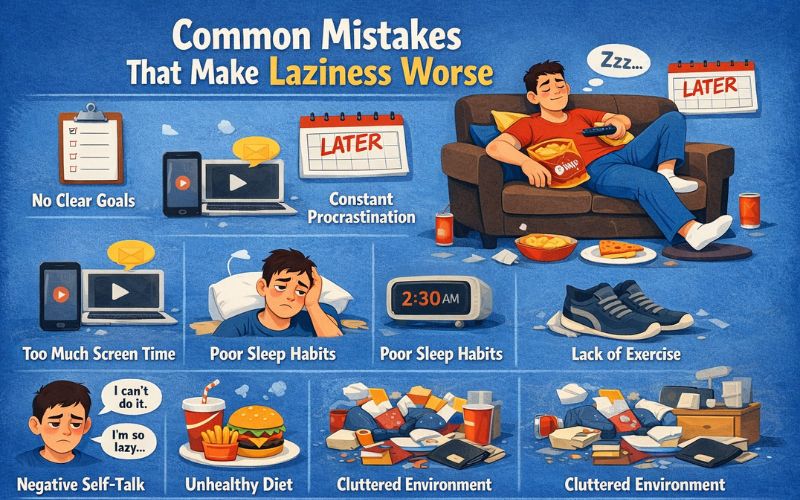
- Waiting for motivation to appear naturally instead of acting proactively.
- Overplanning instead of taking action, which leads to analysis paralysis.
- Multitasking and dividing attention, which reduces efficiency and increases fatigue.
- Comparing yourself to others, which can demotivate instead of inspire progress. For support on building a healthier mindset, read our guide on how to stay motivated when progress feels slow.
Science-Backed Productivity Hacks That Work Fast
- Dopamine Reset: Short breaks without technology improve focus and motivation, resetting your reward system.
- Habit Stacking: Pair a new productive habit with an existing one to make adoption easier.
- Implementation Intentions: Plan exactly when and where you will perform a task to reduce friction.
- Time Blocking vs Energy Blocking: Schedule tasks according to energy levels rather than just the clock to optimize productivity. Check out the best time blocking apps for students for tools that make this easy.
FAQs (Optimized for Featured Snippets)
Q1: Why am I so lazy and unmotivated?
Laziness often results from fatigue, fear of failure, or poor habits. Low energy and stress can make even simple tasks feel difficult. Identifying the root cause allows you to target effective solutions and regain motivation.
Q2: How can I stop procrastinating immediately?
Start with small, manageable tasks that you can complete quickly. Remove distractions and use the 5-minute or 2-minute rule. Momentum from starting will make larger tasks feel easier to tackle.
Q3: Is laziness mental or physical?
It can be both. Mental factors like mindset, fear, and habits interact with physical factors like low energy, poor sleep, and stress. Addressing both mental and physical aspects improves focus and productivity.
Q4: How do I build instant discipline?
Break tasks into small, actionable steps and reward yourself for completing them. Adopt routines and consistent habits that reduce reliance on fleeting motivation. Discipline grows from repeated, deliberate actions.
Q5: Can procrastination be completely eliminated?
While occasional delays are natural, chronic procrastination can be significantly reduced. With self-awareness, structured strategies, and daily routines, you can minimize procrastination and achieve consistent productivity.
The Summary – How to Stop Procrastinating Once and for All
Overcoming procrastination and laziness is possible with awareness, action, and consistency. Identify your triggers, apply acute or chronic strategies as needed, and follow a simple daily routine. Remember: starting is the hardest part, but momentum grows with each small step. Begin today, and your productivity will soar.Ready to take control of your time and boost your productivity even further? Visit MindScribes for more actionable tips, in-depth guides, and resources designed to help you overcome procrastination, build discipline, and achieve your goals faster. Don’t miss our Personal Growth and Health & Wellness categories for more content like this.