Most people don’t struggle with motivation. They struggle with staying consistent once the motivation fades. Self-discipline is what fills that gap, and it’s what turns a good intention into an actual result, whether that means holding a stretching or movement routine together, sticking to a business plan, or simply getting out of bed on time. The good news is that discipline isn’t a personality trait you either have or don’t. It’s a skill, and like any skill, it can be built with the right approach.
What Is Self-Discipline and Why It Matters in 2025
Before looking at how to build it, it helps to be clear on what self-discipline actually is. Self-discipline is the ability to control your impulses, stay focused on long-term goals, and act in line with your values even when it’s hard. It isn’t about being rigid or chasing perfection. It’s about making conscious choices every day that move you closer to what matters most.
In today’s digital age, where attention spans are shrinking and dopamine hits are just a click away, something as simple as building consistent, budget friendly eating habits has become more than a health trend. It’s a marker of intentional living. Discipline sits at the center of that shift. It separates people who consume from those who create, and people who dream from those who actually follow through.
Benefits of Building Self-Discipline
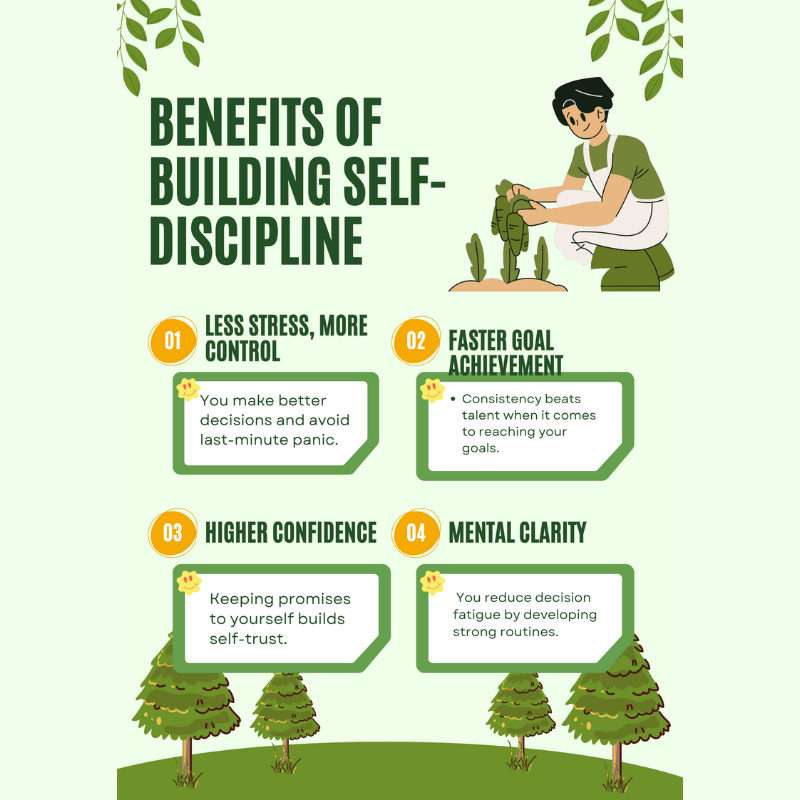
Discipline doesn’t just help you hit a single goal, it changes how you operate across nearly every part of life. Here’s what tends to shift once consistency becomes a habit:
- Less Stress, More Control: You make better decisions and avoid last minute panic.
- Faster Goal Achievement: Consistency beats talent when it comes to reaching your goals.
- Higher Confidence: Keeping promises to yourself builds self-trust and supports strengthening self-confidence over time.
- Mental Clarity: You reduce decision fatigue by developing strong routines.
- Greater Resilience: You learn to push through discomfort and keep going, which ties directly into developing resilience against everyday setbacks.
Neuroscience Behind Self-Control and Consistency
Discipline can feel like a matter of willpower, but there’s real biology behind it too. Science confirms that discipline is a trainable skill, not a fixed trait you’re born with:
- Prefrontal Cortex: The area of your brain responsible for planning and decision making. Training discipline strengthens this region.
- Dopamine Regulation: When you delay gratification and still act, you rewire your brain’s reward system.
- Neuroplasticity: Repeated actions and choices literally reshape your brain’s pathways, making discipline easier over time.
10 Proven Ways to Build Self-Discipline and Stay Consistent
None of these methods require a personality overhaul. They’re small, repeatable actions that compound over weeks and months.
1. Write Down Your Goals
Vague intentions rarely survive contact with a busy week, so the first step is putting your goal on paper in specific terms. A vague goal like “get healthy” lacks clarity. Instead, write: “Work out 4 times a week and meal prep every Sunday.”
2. Practice Prioritizing
Once your goals are clear, protecting them means saying no to things that pull you away, even when those things feel urgent. Discipline is about choosing what matters most over what feels easy.
3. Know and Manage Your Triggers
Most slip ups have a pattern behind them, so it pays to identify what leads you to break your habits. Is it boredom, stress, or fatigue? Once you know, plan for them in advance.
4. Build Accountability Systems
Discipline is easier to maintain when someone else, or something else, is keeping score alongside you. Tell someone your goal. Use habit tracking apps, weekly check ins, or even public declarations to stay on course.
5. Change Your Self-Talk
The way you talk to yourself in hard moments shapes whether you keep going or quit, which is part of why sharpening emotional intelligence in daily life supports discipline so directly. Replace “I can’t do this” with “This is hard, but I’m capable.” Your mindset shapes your consistency.
6. Be Mindful of Urges and Impulses
Impulses feel urgent in the moment, but they usually fade faster than expected if you give them a little space. Pause before reacting. Use the 5 minute rule: wait five minutes before acting on an impulse. Often, the urge passes.
7. Use Habit Stacking
New habits stick faster when they’re attached to something you already do without thinking. Example: “After I brush my teeth, I’ll meditate for 2 minutes.”
8. Create Backup Plans
Life rarely goes exactly as planned, so a backup option keeps a missed day from turning into a missed week. Have a Plan B: if you can’t go to the gym, do a 10 minute home workout.
9. Track Progress and Celebrate Wins
Progress that isn’t visible is easy to underestimate, which is why a simple tracking habit makes such a difference. Small victories compound over time. A visual tracker, like a habit calendar, keeps you motivated.
10. Forgive Yourself and Keep Going
Every long streak eventually includes a slip, and how you respond to it matters more than the slip itself. Discipline doesn’t mean never slipping. What matters is bouncing back, not beating yourself up.
Common Challenges to Self-Discipline and How to Beat Them
Even with the right systems in place, certain obstacles show up again and again. Recognizing them early makes them far easier to work around.
Fear of Failure
Fear of getting it wrong stops a lot of people before they even start. Reframe failure as feedback instead. Each mistake teaches you how to improve your systems, and this mindset shift overlaps closely with working through persistent self-doubt.
Instant Gratification Trap
The pull toward whatever feels good right now is one of the biggest threats to consistency. Use delayed rewards. Tell yourself: “If I finish this task, I’ll enjoy my favorite show later.”
Perfectionism
Waiting for the perfect version of a habit often means never starting it at all. Done is better than perfect. Progress fuels momentum, not paralysis.
Decision Fatigue
Too many small daily decisions quietly drain the willpower you need for bigger ones. Simplify. Meal plan, wear the same work outfit, or create a fixed morning routine.
Real-Life Examples of Self-Discipline in Action
Discipline looks different depending on the field, but the underlying pattern is always the same: showing up whether or not it feels good that day.
- Athletes: Training daily, even on low energy days, builds performance.
- Students: Studying an hour a day consistently outpaces last minute cramming.
- Entrepreneurs: Showing up online or to meetings even without immediate results builds trust and authority.
Self-Discipline Quotes and Affirmations
Sometimes the right words at the right moment are enough to keep a streak alive. A few worth keeping close:
“Discipline is choosing between what you want now and what you want most.” Abraham Lincoln
“We must all suffer one of two things: the pain of discipline or the pain of regret.” Jim Rohn
Daily Affirmations:
- “I follow through on what I say I will do.”
- “Every day, I get better at being consistent.”
- “My habits create my success.”
Final Thoughts: Building Consistency Is a Daily Practice
None of this requires overhauling your entire life overnight. Start small. Be kind to yourself. Track your progress. Surround yourself with support, and consider pairing your routine with habits that shape a more productive daily mindset. Remember, consistency is not about never missing, it’s about always returning.
Discipline isn’t about being perfect. It’s about being committed even when it’s hard, even when it’s boring, and especially when you don’t feel like it. If low energy or racing thoughts tend to derail your routine, working in breathing techniques that ease stress or a few minutes of meditation for sharper mental clarity can make the rest of your system easier to hold onto. And when motivation genuinely runs dry, it helps to have a few motivation strategies built for the long run rather than relying on willpower alone.
FAQs How to Build Self-Discipline and Stay Consistent
Here are quick answers to the questions readers ask most often about building and maintaining self-discipline.
1. What is the best way to build self-discipline?
Start with small, manageable goals and stick to them daily. Use systems like habit tracking, accountability, and mindful routines.
2. How can I stay consistent with my goals?
Break big goals into tiny daily habits, and reward yourself for sticking to them. Set reminders, track progress, and remove distractions.
3. Why do I struggle with self-discipline?
Often, it’s due to unclear goals, lack of motivation, or triggers like stress. Identify your patterns and set up guardrails to help yourself.
4. Can self-discipline be learned or is it innate?
It can absolutely be learned. Like a muscle, it gets stronger the more you use it consistently.
5. What habits help improve consistency?
Morning routines, time blocking, goal setting, and reflection journaling all help maintain consistency over time. Building any of these is easier when paired with managing your time more intentionally and a habit of journaling for clearer emotional insight.