
Black coffee is a timeless drink loved around the world for its bold flavor, energizing kick, and simple ingredient list. Whether you are a seasoned coffee fan or just starting out, learning a reliable black coffee recipe is the fastest way to a delicious, satisfying cup every time.
This guide covers everything you need: the right beans, grind size, water temperature, and coffee-to-water ratio, plus five popular brewing methods, troubleshooting for bitter or sour cups, and honest answers about health. By the end, you will know how to brew a clean, balanced cup at home.
Why Choose Black Coffee?
Before getting into technique, it helps to know what black coffee offers compared with sweetened or milky drinks.
Black coffee is coffee in its purest form, with no milk, sugar, or flavorings. That lets you taste the true character of the beans and brings a few practical benefits:
- Very few calories: Without cream or sugar, a cup of black coffee has only a couple of calories.
- Rich in antioxidants: Coffee contains plant compounds that act as antioxidants and may help the body manage inflammation.
- Improved alertness: The caffeine in black coffee can increase focus and energy.
- Pure flavor: You taste the roast, origin, and brewing method without anything masking them.
Those antioxidants are one reason coffee often fits alongside the foods in an anti-inflammatory eating plan, as long as you keep sugar and heavy cream out of the cup.
Black Coffee at a Glance
This quick reference gives you the numbers that matter most, so you can brew confidently without checking the full guide each time.
- Coffee-to-water ratio: 1 part coffee to 15 to 17 parts water by weight, or 1 to 2 tablespoons of ground coffee per 6 ounces of water
- Water temperature: 195 to 205°F (90 to 96°C)
- Brew time: about 2 to 4 minutes for hot methods, 12 to 24 hours for cold brew
- Grind size: coarse for French press and cold brew, medium for drip and pour over, fine for espresso
- Best served: fresh, within 30 minutes of brewing
What You Need to Brew Black Coffee
You do not need expensive gear, but a few basic tools make your results far more consistent.
- Fresh whole beans: Freshly roasted beans taste noticeably better than pre-ground coffee.
- A grinder: A burr grinder gives a more even grind than a blade grinder.
- A kitchen scale: Weighing coffee and water is the easiest way to repeat a great cup.
- A kettle: A gooseneck kettle gives you control when pouring by hand.
- Filtered water: Coffee is over 98 percent water, so water quality shows up in the taste.
How to Make the Perfect Black Coffee
Great black coffee comes down to four decisions: the beans, the grind, the water, and the method. Work through them in order.
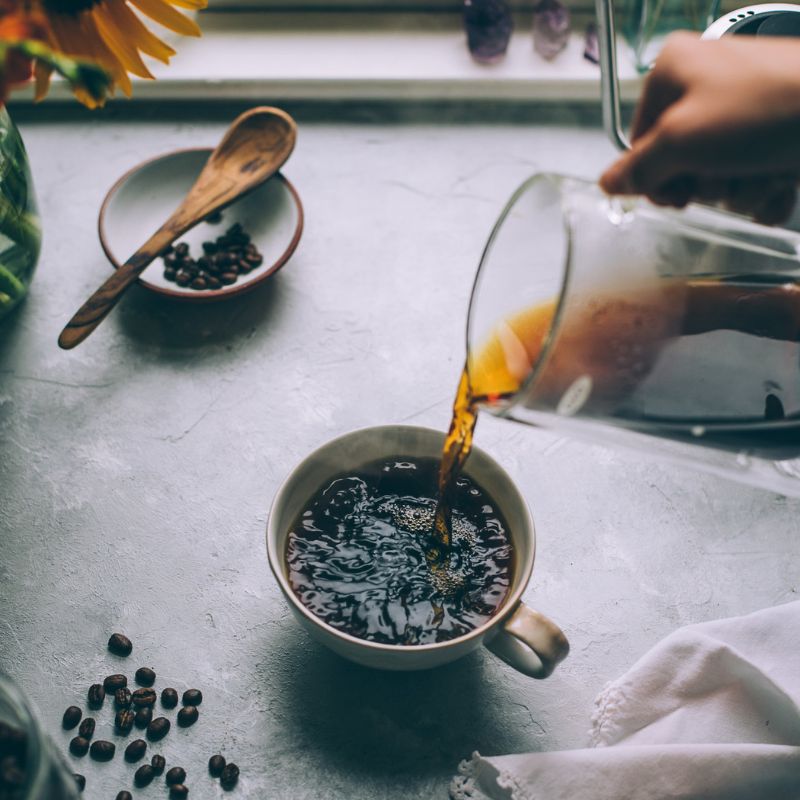
1. Choose Quality Coffee Beans
Beans are the foundation of any black coffee recipe, so start with freshly roasted beans from a source you trust. The roast level shapes the flavor in your cup:
- Light roast: Bright, acidic, and fruity.
- Medium roast: Balanced and sweeter, with moderate acidity.
- Dark roast: Bold, smoky, and rich, with lower acidity.
If you are new to black coffee, a medium roast is the easiest place to start because it avoids both sharp acidity and heavy bitterness.
2. Grind Your Coffee Correctly
Grinding just before brewing preserves aroma and flavor, and the right size depends on how long the water stays in contact with the coffee:
- Coarse grind: Ideal for French press and cold brew.
- Medium grind: Best for drip coffee makers and pour over.
- Fine grind: Suitable for espresso machines.
3. Use Fresh, Clean Water
Water quality and temperature both affect extraction, so treat water as an ingredient, not an afterthought.
Use filtered or bottled water and heat it to 195 to 205°F (90 to 96°C). If you boil the kettle, let it rest for 30 to 60 seconds before pouring. Water that is too hot can scorch the grounds and make the cup bitter.
4. Get the Ratio Right
Ratio controls strength more than any other factor, so measure instead of guessing.
- By weight: Start with 1 gram of coffee for every 16 grams of water. For one 250 ml mug, that is about 15 g of coffee.
- By volume: Use 1 to 2 tablespoons of ground coffee per 6 ounces of water.
- Adjust: Use a little more coffee for a stronger cup, or a little less for a milder one.
5. Pick a Brewing Method
Each method extracts flavor differently, so you can match the method to the taste you like.
- French press: Steep coarse grounds in hot water for about 4 minutes, then press the plunger down slowly. The cup is full-bodied and rich.
- Drip coffee maker: Medium grounds are brewed automatically as hot water drips through a paper filter. It is the most convenient option.
- Pour over: Pour hot water by hand over medium grounds in a cone-shaped filter, controlling the flow. The cup is clean and bright.
- Espresso machine: Hot water is forced through finely ground coffee under high pressure for a concentrated shot.
- Cold brew: Steep coarse grounds in cold water for 12 to 24 hours, then strain. The result is smooth and low in acidity.
Basic Black Coffee Recipe (Pour Over, One Cup)
If you want one simple recipe to start with, this pour over method makes a clean, balanced cup in about five minutes.
- Heat 250 ml of filtered water to 195 to 205°F (90 to 96°C).
- Grind 15 g of coffee to a medium size, similar to coarse sand.
- Place a paper filter in the dripper, rinse it with hot water, and discard the rinse water. This removes any papery taste and warms your mug.
- Add the grounds and pour about 40 ml of water to wet them evenly. Wait 30 seconds, which lets trapped gas escape.
- Pour the remaining water in slow circles, finishing around the 2.5 to 3 minute mark.
- Remove the dripper, give the cup a gentle swirl, and enjoy it right away.
Tips for Enhancing Your Black Coffee
Once the basics are in place, these small habits will lift your coffee from good to consistently excellent.
- Preheat your cup: A warm mug keeps the coffee hot longer.
- Measure every time: A scale removes guesswork and makes good cups repeatable.
- Experiment with beans: Try single-origin beans and blends to find the flavors you love.
- Store beans properly: Keep them in an airtight container away from light, heat, and moisture. Avoid the fridge.
- Buy small batches: Whole beans are at their best within a few weeks of roasting.
- Clean your equipment: Old coffee oils turn rancid and add bitterness to fresh cups.
Why Does My Black Coffee Taste Bitter or Sour?
Most bad cups come from extraction problems, and the fix is usually a small change to grind, time, or temperature.
- Bitter or harsh (over-extracted): Grind coarser, shorten the brew time, or lower the water temperature slightly.
- Sour or sharp (under-extracted): Grind finer, extend the brew time, or use hotter water.
- Weak and watery: Add more coffee or reduce the water.
- Flat or stale: Switch to fresher beans and grind right before brewing.
- Burnt taste: Avoid leaving coffee on a hot plate, and try a lighter roast.
Health Benefits of Black Coffee
Moderate coffee drinking is linked to several potential benefits, though research shows associations rather than guarantees.

- May support brain function: Caffeine can improve alertness, mood, and short-term focus.
- May modestly raise metabolic rate: Caffeine can slightly increase energy expenditure, which is a small effect and not a weight loss solution on its own.
- Linked to lower risk of some conditions: Large studies associate regular coffee drinking with lower rates of type 2 diabetes and Parkinson’s disease, although these findings do not prove cause and effect.
- Rich in antioxidants: Coffee is a major source of antioxidants in many people’s diets.
Because caffeine can lift your focus, many people make coffee part of a planned start to the day, as in a morning routine for mental clarity, rather than reaching for it out of habit.
Black Coffee and Weight Management
Black coffee comes up often in weight loss conversations, so it is worth being clear about what it can and cannot do.
Black coffee has almost no calories, so swapping a sugary latte for it can lower your daily intake. The caffeine may also slightly reduce appetite for some people. Lasting results still depend on overall habits, and a set of realistic lifestyle changes for weight loss will matter far more than any single drink.
How Much Black Coffee Is Too Much?
Moderation is the key to enjoying the benefits without the downsides.
- A typical 8 ounce cup of brewed coffee contains roughly 95 mg of caffeine, though it varies by bean and method.
- Up to about 400 mg of caffeine per day, or around four cups, is generally considered safe for most healthy adults.
- Pregnant people are usually advised to keep intake lower, often under 200 mg per day, and should confirm limits with their doctor.
- Too much caffeine can cause jitteriness, a racing heart, stomach upset, or trouble sleeping.
Caffeine can stay in your system for several hours, so late-day cups may cut into rest. If your sleep is suffering, these natural ways to sleep better are worth trying, and moving your last cup earlier in the day is a simple first step.
Frequently Asked Questions About Black Coffee
Here are quick answers to the questions people ask most often when they start brewing black coffee at home.
How strong should my black coffee be?
Strength depends on taste and brewing method, but a good starting ratio is 1 to 2 tablespoons of coffee per 6 ounces of water, or about 1 gram of coffee per 16 grams of water. Adjust from there to make it stronger or milder.
Is black coffee good for weight loss?
It can help in a small way. Black coffee has almost no calories and may slightly raise metabolism or reduce appetite, but it will not cause weight loss on its own. It works best alongside a balanced diet and regular activity.
Can I drink black coffee on an empty stomach?
It depends on your tolerance. Some people find it sharpens focus without any problem, while others get stomach discomfort or acid reflux. If it bothers you, have it with or after food.
What is the best grind size for black coffee?
It depends on the brewing method. Use coarse for French press and cold brew, medium for drip and pour over, and fine for espresso.
How long can I store brewed black coffee?
For the best taste, drink it within 30 minutes of brewing. If you need to keep it longer, store it in an insulated flask, since coffee left on a hot plate turns bitter. Cold brew keeps for up to about a week in the refrigerator.
How many cups of black coffee a day is safe?
For most healthy adults, up to about 400 mg of caffeine per day, roughly four 8 ounce cups, is considered safe. Sensitivity varies, so reduce your intake if you feel jittery or sleep poorly.
Why does my black coffee taste bitter?
Bitterness usually means over-extraction. Try a coarser grind, a shorter brew time, or slightly cooler water, and make sure your beans are fresh and your equipment is clean.
What is the difference between hot and cold brew black coffee?
Hot brewing extracts flavor quickly and highlights acidity and aroma. Cold brew steeps coarse grounds in cold water for 12 to 24 hours, producing a smoother, lower-acid, naturally sweeter cup that can be served over ice.
Final Thoughts
To wrap up, here is what matters most when you want a great cup of black coffee at home.
Mastering a black coffee recipe comes down to quality beans, a fresh grind, clean water at the right temperature, and a ratio you measure instead of guess. Pick the brewing method that suits your taste, adjust one variable at a time, and you will soon be brewing a rich, bold cup that wakes you up and delights your senses.
Coffee works best as one part of a balanced routine, and building simple healthy lifestyle habits for adults around it will help you get the benefits without the downsides.


