Modern work culture rewards long hours, back to back meetings, and screen heavy tasks, leaving little room for physical movement. Staying active isn’t only about hitting the gym though. It is about making smarter choices inside your existing daily routine. If you are wondering how to stay active during a busy work schedule, you are not alone, and the good news is that you can build in far more movement without disrupting your productivity.
This guide walks through practical strategies for weaving movement into your day, whether you work remotely, from an office, or spend much of your time on the go.
Why Physical Activity Matters, Even on Busy Days
Before getting into the daily strategies, it helps to understand why this matters beyond the scale. Staying active is not only about physical fitness. Regular movement improves energy, reduces stress, sharpens mental clarity, and helps guard against chronic conditions like hypertension and diabetes. Health authorities generally recommend at least 150 minutes of moderate intensity activity per week, a target that is realistic even with a demanding schedule once it is broken into small daily pieces.
Morning Movement Sets the Tone
How you open the day tends to set the tone for everything that follows, which makes the morning a good place to start building movement in. Starting your day with even 10 to 15 minutes of light movement can lift energy and reduce morning sluggishness before work even begins. Stretching, gentle yoga, or a brisk walk around the block wakes up your body and improves circulation.
Simple Ways to Start Your Morning Active
A few small adjustments to your morning routine make this far easier to stick with:
- Lay out workout clothes the night before
- Try a short guided mobility or stretching routine
- Opt for standing coffee time instead of scrolling social media
If mornings tend to feel foggy no matter how much sleep you get, building a proper healthy morning lifestyle routine around this kind of light movement can make the rest of the day noticeably easier to manage.
Desk Jobs Do Not Mean Zero Movement
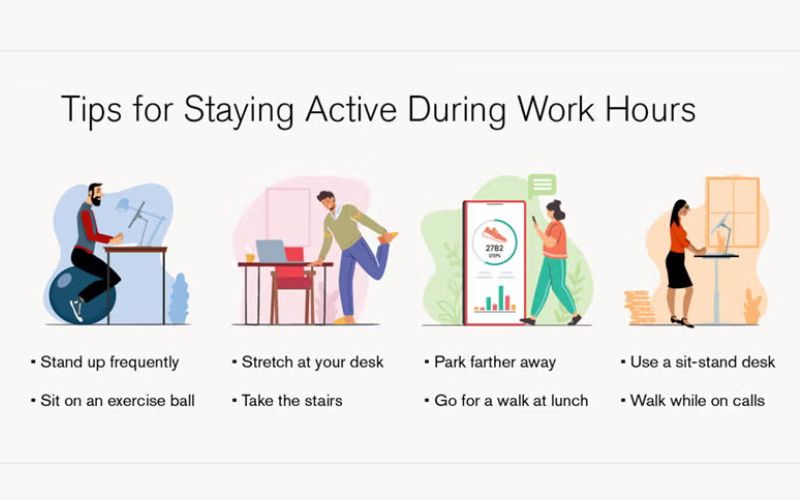
If you are desk bound for most of the day, the goal shifts from finding big blocks of time to breaking up long stretches of sitting with small, frequent movement.
Simple Ways to Stay Active at Work
- Set a timer to stand or stretch every 30 to 45 minutes
- Use a standing desk or alternate between sitting and standing
- Walk during calls or meetings using wireless headphones
- Take the stairs instead of the elevator
- Do calf raises or squats during short breaks
These small actions might not feel like much in the moment, but tracking how they add up through daily step counts and walking habits shows just how much they compound into real health benefits over time.
Active Commuting Is a Game Changer
For anyone whose day includes a commute, that travel time is often the easiest place to add activity without carving out extra time at all. Walking or cycling to work, where feasible, or simply getting off one stop early on public transit, adds a few hundred extra steps to your day without any extra planning.
- Walk briskly to your workplace
- Use public transport and walk to and from stations
- Bike to work at least twice a week if possible
This kind of habit is a small piece of a bigger shift, and understanding the gap between an active lifestyle and a sedentary one makes it easier to see why these small commuting choices matter so much over months and years.
Lunchtime Workouts and Power Walks
Your lunch break is valuable for more than food. If you are still working out how to stay active during a busy work schedule, using 20 minutes of your lunch hour for movement is one of the most reliable habits you can add.
Ideas to Get Moving During Lunch
- Walk around the building or office complex
- Do a quick bodyweight circuit of push-ups, jumping jacks, and squats
- Follow a short, high intensity video workout
- Step outside for fresh air and sunlight to lift your mood
Short bursts of activity midday tend to sharpen afternoon focus and help you avoid the energy slump that often follows lunch.
Evenings Are for Intentional Movement
After a long day, motivation tends to run low, but your body still benefits from decompressing through movement rather than defaulting straight to the couch.
Suggestions for Winding Down Actively
- Go for a post dinner walk with family or friends
- Do light stretching or gentle yoga before bed
- Track a simple step count goal using a wearable or phone app
Gentle evening movement also feeds directly into rest, and pairing it with steps to improve your sleep quality naturally tends to make both the movement and the sleep itself easier to sustain. If you are aiming to figure out how to stay active during a busy work schedule long term, remember that consistency matters far more than intensity.
Smart Tools and Apps to Keep You Accountable
Sometimes all a busy schedule needs is a gentle nudge, and technology can handle that reminder for you.
Apps and Tools That Help
- Pomodoro timers with built in movement reminders
- Calendar blocks reserved for walking or stretching
- Fitness tracking apps for logging quick workouts
- Step trackers to set and monitor daily goals
If you want a more curated starting point, a shortlist of the best health and wellness apps can save you the trial and error of testing a dozen options yourself. These tools help you stay on track and give visible proof that movement is part of your routine, even when life gets hectic.
FAQs
Here are answers to the questions people ask most often about staying active on busy workdays.
1. Can I stay active without going to the gym?
Yes. Walking, stretching, desk exercises, and household chores all count. What matters is frequent movement, not formal workouts.
2. How many steps should I aim for on a busy schedule?
While 10,000 steps is a common target, aiming for at least 6,000 to 8,000 steps daily with consistency still brings significant health benefits.
3. What are micro-workouts?
These are short, 5 to 10 minute bursts of activity you can fit in throughout the day. They boost energy and prevent long stretches of sitting.
4. Can standing more often replace exercise?
Standing reduces sedentary time, but it does not replace cardio or strength training. Think of it as a helpful addition rather than a substitute.
5. What is the most important tip for staying active at work?
Plan movement into your day the way you would plan a meeting. Treating it as non-negotiable makes it far more likely to actually happen.
6. How do I stay motivated to keep moving on busy days?
Attach movement to habits you already have, like walking during a call or stretching after a meeting ends. Anchoring new habits to existing ones makes them far easier to maintain than relying on willpower alone.
7. Is it better to spread activity through the day or do one long workout?
Both approaches offer real benefits, and for most busy schedules, spreading shorter bursts of movement across the day is easier to sustain than trying to protect one long uninterrupted workout block.
Conclusion
Balancing work and wellness is not an easy task, but small, intentional efforts add up to real change. If you have been struggling with how to stay active during a busy work schedule, start with micro-changes: stand more, walk often, and stretch daily.
None of this requires a major lifestyle overhaul. For the bigger picture on fitting movement, rest, and work together sustainably, a broader look at work-life balance and lifestyle habits can help these daily changes stick well beyond the first busy week.