The history of operating system development is really the story of how computing grew from machines run by switches and punch cards into the smart, connected devices we carry today. At every stage, operating systems (OS) changed how people use computers, and understanding that path explains why modern systems are designed the way they are.
This guide walks through the timeline step by step, from the first batch systems to cloud, mobile, and AI driven platforms.
What Is an Operating System?
To follow the history, it helps to start with a clear idea of what an operating system is.
An operating system is software that sits between computer hardware and the user. It manages hardware resources, controls how programs run, and provides a way to work with files and applications. Well known examples today include Windows, macOS, Linux, Android, and iOS. To see what these systems are built from, explore the core components of an operating system.
But where did it all begin?
The Early Days (1950s to 1960s): Batch Processing Era
The first computers had no operating system at all, and this section shows how automation slowly arrived.
In the earliest stage of computing, users controlled machines through switches, punch cards, and printed output. Every job had to be scheduled and loaded by hand, and the expensive computer sat idle between tasks.
By the mid 1950s, the first generation of operating systems appeared to automate this work through batch processing. Jobs were grouped into batches and run one after another with no user interaction. A well known early example is GM-NAA I/O, created in 1956 by General Motors and North American Aviation for the IBM 704. It automated input and output handling and moved jobs from one to the next. The idea lives on in the modern batch operating system model.
Multiprogramming and Time-Sharing (1960s to 1970s)
The next leap was letting a computer do more than one thing at a time, and this period introduced ideas we still rely on.
During the 1960s, multiprogramming allowed several programs to sit in memory together so the CPU could switch to another job while one waited for input or output. IBM’s OS/360, announced in 1964, brought this approach to mainstream business computing.
Time-sharing came next, letting many users interact with one central computer at the same time. A landmark system was CTSS (Compatible Time-Sharing System), first demonstrated at MIT in 1961, which paved the way for interactive computing. These ideas are the ancestors of today’s multitasking operating system design, and they depend on interrupts and fast CPU switching.
This era also produced Unix in 1969, created by Ken Thompson and Dennis Ritchie at Bell Labs. Its simple, portable design influenced almost every operating system that followed. You can read about its legacy through the UNIX standards maintained by The Open Group.
Personal Computing Revolution (1980s to 1990s)
Once computers became small and cheap enough for homes and offices, operating systems had to become friendlier.
The rise of personal computers (PCs) was the next major milestone in the history of operating system design. Apple and Microsoft led the way with interfaces that ordinary people could use.
- MS-DOS arrived in 1981 with a command line interface and powered the early IBM PC era.
- In 1984, the Apple Macintosh brought the graphical user interface (GUI) to a mass audience, building on earlier research at Xerox PARC.
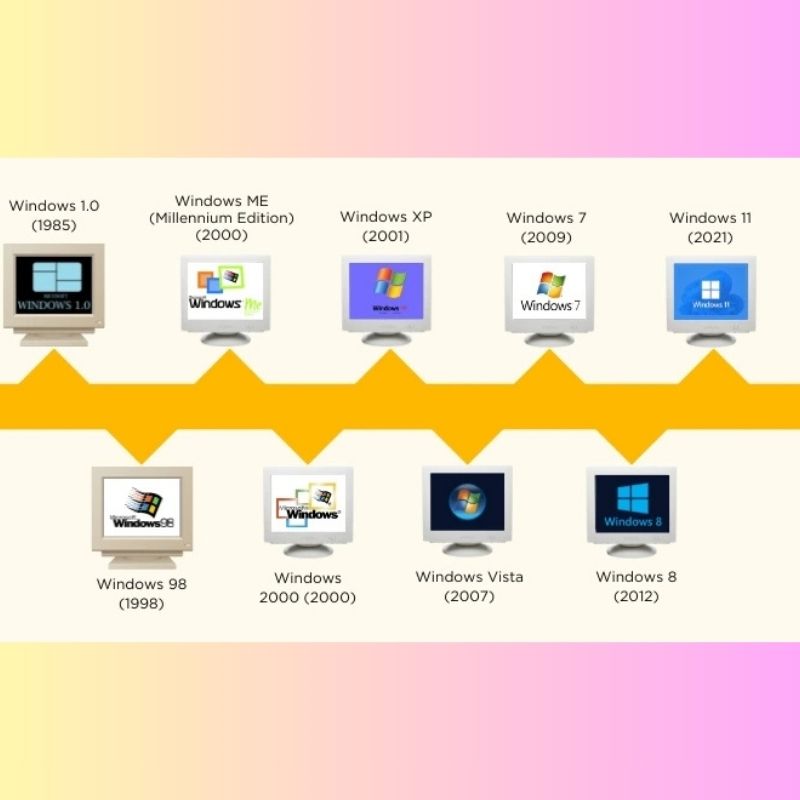
- Windows 1.0 followed in 1985, and Windows 95 and Windows NT in the 1990s turned Windows into the dominant desktop OS.
Meanwhile, Linux appeared in 1991, created by Linus Torvalds as a free, Unix-like kernel. Its open source model let developers and universities improve it together, and you can follow its story in the history of the Linux kernel. Apple later moved to a Unix based foundation with Mac OS X in 2001, which became today’s macOS.
The Mobile and Networked Era (2000s to Present)
Smartphones and constant internet access pushed operating systems in a new direction, which is covered here.
- iOS launched with the iPhone in 2007, bringing a touch interface and a polished app ecosystem (see the Apple Newsroom for its history).
- Android, built on the Linux kernel, reached consumers in 2008 and became the most widely used mobile OS in the world.
- Chrome OS and other cloud centered systems shifted the focus from the device to the network, a trend you can see in how distributed operating systems work.
Server systems such as Windows Server, Red Hat Enterprise Linux, and Ubuntu Server now run most of the world’s cloud platforms and data centers. To learn how Chrome OS grew, see the development of Chrome OS.
The Future of Operating Systems: AI, Edge, and Beyond
The story is far from finished, and several trends are already shaping the next chapter.
- AI integration: Operating systems are adding predictive features, smarter resource management, and built in assistants.
- Edge computing: Systems must run on small, distributed devices, often with strict timing needs like those in a real-time operating system.
- Quantum computing: Early research suggests new software layers will be needed to control quantum hardware.
Together these changes point to operating systems that are more intelligent, autonomous, and adaptable. For a wider view of how designs differ today, compare the different types of operating systems.
Key Milestones in the History of Operating System
The table below gathers the major dates in one place for quick reference.
| Year | Milestone |
|---|---|
| 1956 | GM-NAA I/O, an early batch OS built by General Motors and North American Aviation for the IBM 704 |
| 1961 | CTSS demonstrated at MIT, an early time-sharing system |
| 1964 | IBM announces OS/360 for mainframes |
| 1969 | Unix created at Bell Labs |
| 1981 | MS-DOS released with the IBM PC |
| 1984 | Apple Macintosh brings the GUI to the mass market |
| 1991 | Linux kernel announced by Linus Torvalds |
| 2007 | iPhone and iOS released |
| 2008 | First Android phone released |
FAQs: Understanding the History of Operating Systems
These short answers cover the questions people ask most often about the history of operating systems.
1. Why is it important to study the history of operating system development?
It gives context for today’s technology, shows why current designs exist, and helps predict where computing is heading.
2. What is the most influential operating system in history?
Unix is widely seen as the most influential because of its portable, modular design. Linux, macOS, and Android descend from or were inspired by its ideas, although Linux is a separate Unix-like system rather than Unix code.
3. Are old operating systems still in use?
Yes. Legacy systems, including older Windows versions and early Unix variants, still run in industrial equipment, ATMs, and embedded devices where replacing them is costly or risky.
4. What was the first graphical operating system?
Graphical interfaces started at Xerox PARC with the Alto in 1973, and the Xerox Star in 1981 was an early commercial GUI system. Apple’s Macintosh in 1984 brought the GUI to a mass audience.
5. How has mobile computing changed operating system design?
Mobile systems focus on battery efficiency, lightweight performance, security sandboxing, and touch input, which pushed designers to rethink traditional desktop approaches.
Conclusion: Why the History of Operating System Matters
To wrap up, here is what this timeline teaches us.
From early batch systems to intelligent mobile platforms, the history of operating system design shows how software evolves with hardware and user needs. Operating systems remain the quiet backbone of every device, server, and cloud service, and they will keep changing as AI, IoT, and edge computing grow.
For more clear, practical technology explainers, visit MindScribes.