Waking up early can feel like a nightmare if you’re naturally a night owl. For many “non-morning people,” mornings are often rushed, groggy, and stressful. But here’s the good news: you don’t need to become a morning person overnight to feel energized and productive. A few small, intentional habits can transform your mornings, boost your focus, and set the tone for a successful day.
In this article, we’ll explore practical morning routine ideas for non-morning people, along with actionable tips to make mornings less painful and more enjoyable.
Why Morning Routines Matter for Non-Morning People
A morning routine isn’t just for early risers, it’s a tool to improve mental clarity, energy levels, and overall well-being. For non-morning people, mornings can be chaotic, leaving you feeling drained before the day even begins.
Here’s why routines help:
Mental clarity: Starting the day with structure reduces decision fatigue.
Energy boost: Simple habits like stretching, hydration, and breakfast give your body the fuel it needs.
Improved productivity: Completing small tasks early can create momentum for the rest of the day.
Even small adjustments, like waking up 15 minutes earlier or avoiding your phone first thing, can make a huge difference. If you want to dive deeper into how morning routines enhance focus, check out our guide on morning routine for mental clarity and focus.
Morning Routine Ideas for Non-Morning People

Here are some actionable tips to make mornings smoother, even if you’re not naturally a morning person.
1. Stretch, Rise, Throw Back the Covers
One of the easiest ways to wake up your body is with a short stretch or light movement. Spend 2–5 minutes doing simple stretches:
- Reach your arms overhead
- Touch your toes or do gentle twists
- Roll your shoulders
This increases blood flow, improves alertness, and helps shake off morning grogginess. Starting the day with movement also signals your brain that it’s time to transition from sleep to activity.
2. Defer Devices
Resist the temptation to check your phone or emails first thing. Scrolling through social media can trigger stress and distract from your morning intentions. Instead, spend the first 15–30 minutes device-free.
- Focus on yourself first
- Practice mindfulness or enjoy quiet time
- Avoid notifications that can derail your energy
Deferring devices helps you start the day with calm and focus instead of stress. To learn more about incorporating mindfulness into your daily life, explore our article on how to practice mindfulness in daily life.
3. Make Yourself a Delicious Breakfast
Breakfast is not just a meal, it’s fuel for your body and brain. For non-morning people, even a small, energizing breakfast can make a huge difference.
Try:
- Greek yogurt with fruit and nuts
- Smoothie with spinach, banana, and protein powder
- Overnight oats prepared the night before
Pair your meal with a glass of water to rehydrate after sleep. Eating a nutritious breakfast kickstarts metabolism and provides steady energy throughout the morning. For more wellness tips, read our comprehensive guide on daily health and wellness routine.
4. Do Something Enjoyable While You Eat
Turn breakfast into a pleasant experience:
- Listen to your favorite music or podcast
- Read a few pages of a book
- Journal or plan your day
Doing something enjoyable helps your brain associate mornings with positive experiences, making it easier to wake up consistently.
5. Have an Inspiring Morning Activity
Incorporate a short activity that inspires you:
- Meditation or deep breathing for 5 minutes
- Writing down 3 things you’re grateful for
- Taking a short walk outside for fresh air and sunlight
These practices boost mood, reduce stress, and improve focus. Even 10 minutes of intentional activity can have a lasting impact on your day. If you’re interested in using mindfulness to manage emotions better, our article on mindfulness practices to improve emotional control offers excellent insights.
6. Make the Bed
It may seem small, but making your bed has psychological benefits. Completing this simple task first thing:
- Signals productivity to your brain
- Creates a sense of order and calm
- Reduces visual clutter
It’s an easy win that sets a positive tone for the day.
7. Dress Your Best
Even if you’re working from home, changing out of pajamas can improve mood and confidence. Dressing well:
- Signals to your brain that it’s time to be productive
- Can boost self-esteem
- Makes you feel more prepared for unexpected tasks or meetings
A neat appearance, even casual, can create a psychological shift that supports energy and focus.
Additional Tips for Non-Morning People
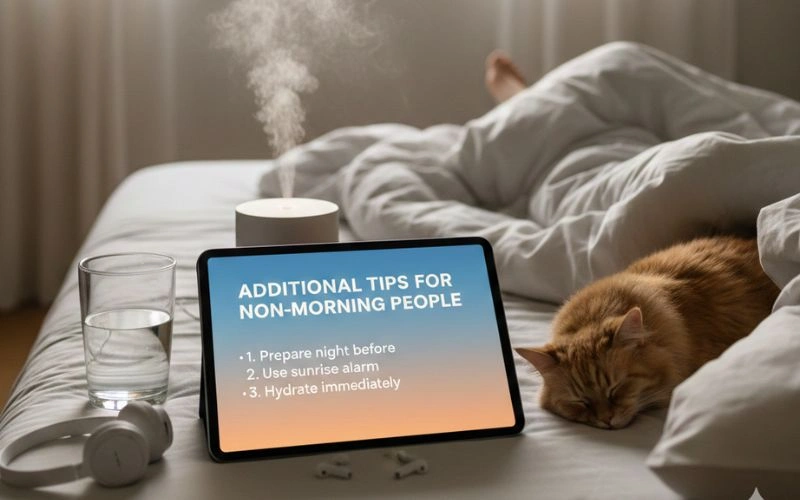
If you’re struggling to implement these habits, here are extra tips to ease the transition:
- Shift your sleep gradually: Go to bed 15–30 minutes earlier each night until your body adjusts.
- Use natural light: Open curtains immediately or step outside to regulate your circadian rhythm.
- Plan your morning the night before: Decide on breakfast, clothing, and key tasks in advance.
- Limit caffeine late in the day: This helps you fall asleep earlier naturally.
- Incorporate quick energizing exercises: A few jumping jacks or a short walk can shake off grogginess.
Building sustainable morning habits requires consistency and self-discipline. Learn more strategies in our guide on how to build self-discipline and stay consistent.
Sample Morning Routine for Non-Morning People
Here’s a simple 30–45 minute routine for late risers:
- Wake up & stretch (5 min)
- Hydrate & avoid devices (5 min)
- Quick energizing activity / meditation (5 min)
- Prepare and enjoy breakfast (10–15 min)
- Do something enjoyable / plan the day (5–10 min)
- Make the bed & get dressed (5 min)
This routine can be adjusted based on your schedule, but even small consistency can lead to big improvements in energy, mood, and productivity. For more ideas on building productive habits throughout your day, check out daily habits to improve your mindset and productivity.
Conclusion
Being a non-morning person doesn’t mean you can’t enjoy productive, energetic mornings. By implementing simple habits like stretching, deferring devices, eating a nourishing breakfast, and incorporating enjoyable activities you can create a morning routine that works for you.
Experiment, adjust, and find what feels natural. Start small and celebrate each morning’s win. Over time, these habits will help you wake up with more energy, focus, and a positive mindset, even if mornings have never been your strong suit. And remember, progress often feels slow, but staying motivated through the journey is key—learn how to stay motivated when progress feels slow.
Discover more tips and routines to boost productivity and focus at MindScribes.
FAQs
1. What is the best morning routine for non-morning people?
The best morning routine is simple, consistent, and energizing. Focus on small habits like stretching, hydrating, eating breakfast, and avoiding devices for the first 15–30 minutes. Over time, these habits help you wake up feeling alert and productive.
2. How can non-morning people wake up earlier?
Gradually shift your sleep schedule by 15–30 minutes each night. Use natural light in the morning and limit caffeine late in the day. Planning the next day’s morning routine also helps make waking up easier.
3. Is breakfast important for non-morning people?
Yes, breakfast provides energy and improves focus. Even a small, nutritious meal like yogurt, fruit, or oats helps your body transition from sleep to activity. Pair it with water to rehydrate and start your day right.
4. Can non-morning people benefit from exercise in the morning?
Absolutely. Light stretching or a short walk improves blood flow and reduces grogginess. Quick energizing exercises also boost mood and help set a productive tone for the day.
5. How can I make mornings more enjoyable if I’m not a morning person?
Incorporate activities you enjoy, like reading, journaling, or listening to music while having breakfast. Keeping your morning simple and pleasant reduces stress. Over time, it trains your brain to associate mornings with positive experiences.