Wireless technology has already transformed how we communicate, connect, and control our homes. Now, a new revolution is underway wireless energy transfer for home-scale charging. This innovation aims to eliminate cables, adapters, and charging clutter by allowing devices to receive power anywhere within a room, much like how WiFi delivers the internet today. With research-led breakthroughs such as Disney Research’s wireless power room, home-scale wireless charging is moving closer to reality.
Wireless Power Transmission Safely Charges Devices Anywhere Within A Room
Wireless power transmission is no longer limited to charging pads or short-distance contact-based systems. Modern room-scale solutions enable devices to receive energy while freely moving within a defined space. Using controlled electromagnetic fields, power can be transmitted safely through the air to multiple devices at once.
This approach supports a wide range of electronics, including smartphones, wearables, sensors, and smart home devices. The key advantage lies in convenience—users no longer need to locate cables or specific charging spots. Instead, energy becomes an invisible utility embedded into the room itself, redefining how homes manage power consumption.
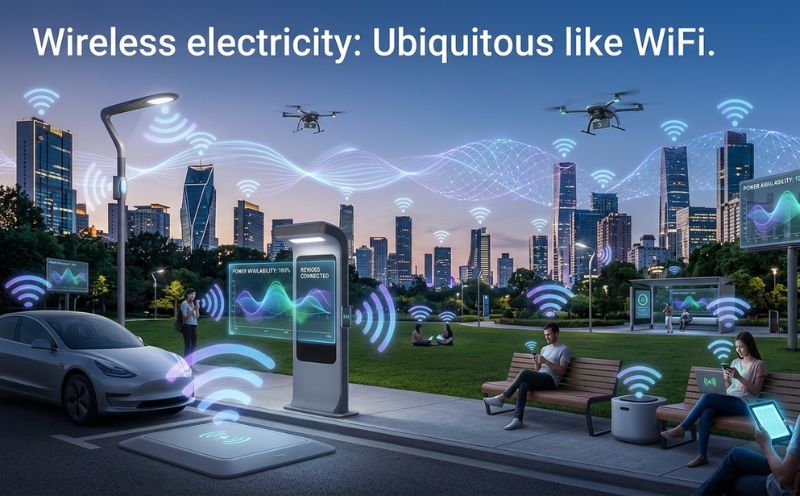
Wireless electricity: Ubiquitous like WiFi
Disney Research introduced a breakthrough concept that demonstrated how an entire room could act as a wireless charging zone. By turning walls, floors, and ceilings into resonant structures, electrical energy can be distributed efficiently throughout the space.
This research highlighted that wireless electricity could follow the same path as wireless data always available, reliable, and safe. Technologies Secure Indoor Networks are already exploring similar ideas of embedding connectivity into our physical spaces. The idea of power being as accessible as WiFi represents a paradigm shift, especially for residential environments where convenience and automation are increasingly valued.
What Is Wireless Energy Transfer for Home-Scale Charging?
Wireless energy transfer for home-scale charging refers to the ability to deliver electrical power wirelessly across a room-sized area to multiple devices simultaneously. Unlike traditional wireless charging pads, this technology does not require physical contact or precise alignment.
The system typically consists of a central power transmitter integrated into the home structure and receivers embedded within devices. These receivers convert transmitted energy into usable electrical power, enabling continuous or periodic charging without user intervention.
How Room-Scale Wireless Charging Technology Works
Room-scale wireless charging systems rely on advanced electromagnetic field control. Power transmitters generate fields tuned to specific frequencies that efficiently deliver energy across a confined space. Devices equipped with compatible receivers resonate with these fields and draw power as needed.
Smart control mechanisms ensure that energy is only directed where devices are present, reducing waste and improving safety. This intelligent power management is essential for making wireless energy transfer practical and efficient in everyday home environments. Similar intelligence is being applied in other breakthrough tech areas such as Memristor-Based NeuromorphicI, which brings smarter processing to everyday devices.
Disney Research Wireless Power Room Explained
The Disney Research wireless power room concept demonstrated a controlled environment where energy circulates safely within the room. Instead of radiating power outward, the system contains energy within the space, minimizing external interference.
This approach ensures consistent charging regardless of device position while meeting international safety standards. Although still largely experimental, the concept has influenced ongoing research and commercial efforts in wireless home charging technologies. Researchers working on Programmable Metasurfaces are exploring similar principles to reshape how signals travel through physical environments.
Safety Standards and Human Exposure Considerations
Safety is a primary concern for any wireless energy system used in homes. Modern wireless power technologies are designed to operate well within established electromagnetic exposure limits. Continuous monitoring systems adjust power levels automatically when people or pets are present.
Extensive testing shows that room-scale wireless energy transfer can be as safe as common household technologies like WiFi routers and Bluetooth devices. Regulatory compliance and transparent safety validation will play a crucial role in widespread adoption.
Advantages of Wireless Energy Transfer in Smart Homes
Wireless home-scale charging offers multiple advantages beyond convenience. It reduces cable clutter, extends device lifespan by enabling optimized charging cycles, and supports seamless integration with smart home systems.
For Internet of Things (IoT) devices, wireless power eliminates the need for frequent battery replacements. Sensors, security devices, and automation tools can operate continuously, improving reliability and reducing maintenance costs. The growing role of IoT is also explored in Use Cases of Backscatter, which shows how low-power communication is revolutionizing connected devices.
Limitations and Technical Challenges
Despite its promise, wireless energy transfer still faces technical challenges. Power efficiency decreases with distance, making high-energy devices more difficult to support. Infrastructure costs and retrofitting existing homes also present barriers.
Additionally, standardization across manufacturers remains a challenge. For wireless home charging to become mainstream, interoperable systems and affordable implementations will be essential. Those interested in the broader tech landscape can read about advances in energy storage through Lithium-Sulfur Batteries, which tackles similar challenges in power efficiency.
Wireless Energy Transfer vs Traditional Wired Charging
Traditional wired charging offers high efficiency and fast power delivery, but it lacks flexibility. Wireless home-scale charging prioritizes convenience and automation over raw charging speed.
While wired solutions may remain necessary for high-power appliances, wireless energy transfer is well-suited for everyday electronics and smart devices. Over time, improvements in efficiency could narrow the gap between wired and wireless power delivery.
Real-World Use Cases: Homes, IoT, and Smart Devices
In residential settings, wireless energy transfer can power smartphones, wearables, remote controls, and smart assistants effortlessly. IoT sensors for lighting, climate control, and security can operate continuously without manual charging.
Future homes may include dedicated wireless power rooms or integrated systems that cover living spaces, enabling truly cable-free living environments. If you’re thinking about building a smarter, more connected home lifestyle, Simple Lifestyle Changes offers practical ideas on how technology and healthy habits can work hand in hand.
Future of Wireless Power in Residential Environments
The future of wireless energy transfer for home-scale charging looks promising. Advances in materials science, AI-based power management, and regulatory frameworks are accelerating development.
As smart homes become more common, wireless power is expected to evolve into a standard utility, supporting sustainable energy use and enhanced user experiences. Technologies like 6G Terahertz Applications are already paving the way for a hyper-connected future where wireless power will play a central role.
Is Wireless Home Charging Ready for Mass Adoption?
While not yet fully mainstream, wireless home charging is rapidly progressing. Early adoption may begin with specific rooms or device categories, gradually expanding as technology matures.
With continued research and cost reductions, wireless energy transfer is likely to become a defining feature of next-generation homes. For more forward-thinking tech reads, visit the MindScribes Tech category to stay updated on what’s shaping our future.
FAQs
What is wireless energy transfer for home-scale charging?
Wireless energy transfer for home-scale charging allows devices to receive power through the air within a room.It removes the need for charging cables, plugs, or docking stations.
This technology supports seamless and automatic power delivery at home.
How does room-scale wireless charging work?
Room-scale wireless charging uses controlled electromagnetic fields to transmit energy.Compatible devices capture this energy using built-in receivers.The system adjusts power levels based on device presence and demand.
Is wireless home-scale charging safe for daily use?
Yes, these systems operate within international electromagnetic safety standards.Power levels are continuously monitored and automatically regulated.The exposure is similar to everyday technologies like WiFi routers.
Can multiple devices charge at the same time in one room?
Yes, multiple devices can be charged simultaneously within the same space.The system distributes power intelligently among connected devices.This makes it ideal for smart homes and IoT environments.
When will wireless energy transfer become common in homes?
Wireless home charging is currently in the early adoption stage.Ongoing research is improving efficiency and reducing costs.Widespread residential use is expected in the coming years.
Conclusion
Wireless energy transfer for home-scale charging represents a major step toward truly intelligent living spaces. By making power as accessible as WiFi, this technology removes physical limitations and enhances everyday convenience. While challenges remain, ongoing research and innovation suggest a future where homes are seamlessly powered no cables required.