Every content team eventually hits the same wall: more topics to cover than hours in the week to research them properly. Spreadsheets pile up, keyword lists go stale before they’re even actioned, and someone always ends up guessing which topic to write next. This is exactly the gap that AI content planning tools were built to close. Instead of manually trawling search results and guessing at intent, teams can now use keyword AI to surface, cluster, and prioritize topics automatically turning weeks of research into an afternoon of review. This guide breaks down how automation actually works, how to choose a tool that fits your team, and where human judgment still needs to stay firmly in the loop.
What Is AI Content Planning, Really?
Before adopting any tool, it helps to know what “automated” actually means here. AI content planning uses natural language processing and search-data models to read thousands of queries, group them by topic and intent, and rank them by opportunity search volume weighed against ranking difficulty. It is not a content generator; it is a research layer that tells you what to write about and why, before a single sentence gets drafted.
● Pulls keyword and SERP data from search APIs in real time
● Groups related queries into topic clusters instead of flat lists
● Scores each cluster by traffic potential and competition
● Flags content gaps competitors haven’t covered yet

Why Manual Keyword Research Runs Out of Road
A single writer can research a handful of keywords a day with real care, cross-checking search volume, intent, and competitor coverage by hand. That pace works fine for a five-post-a-month blog. It collapses the moment a publication scales to daily output across multiple verticals, because the research backlog grows faster than any human team can clear it. Content planning automation doesn’t replace that judgment, it just clears the backlog so editors spend their time deciding, not digging.
How Keyword AI Actually Clusters and Scores Topics
The logic underneath most keyword AI platforms is worth understanding, not just trusting blindly. These tools run semantic clustering: instead of matching exact keyword strings, they group queries by the underlying question a searcher is trying to answer. “Best budget laptop” and “cheap laptop for students” land in the same cluster because Google already treats them as having the same intent, even though the words differ. On top of clustering, most tools layer a difficulty score built from backlink density, domain authority of ranking pages, and content depth giving you a realistic read on which clusters are actually winnable rather than just popular.
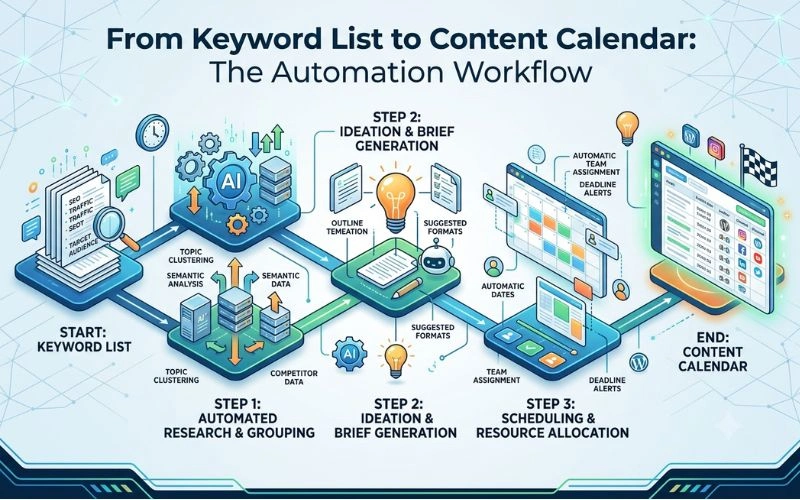
From Keyword List to Content Calendar: The Automation Workflow
Turning a raw keyword export into a working editorial calendar is where most of the time savings show up.
● Import or connect your keyword AI tool to a live rank-tracking feed
● Let the tool cluster queries and assign each cluster a priority score
● Export the top clusters directly into your calendar or project board
● Assign each cluster a target intent, word count, and publish date
● Review flagged low-competition topics weekly rather than researching from scratch
Once that pipeline is set up, new opportunities flow in automatically instead of requiring a fresh research sprint every month.
Picking an AI Content Planning Tool Without Getting Overwhelmed
The market is crowded, and most platforms promise the same thing in slightly different language, so the real differentiator is how well a tool surfaces winnable, low-competition topics rather than just repeating what every competitor already ranks for. For a closer look at which platforms actually do this well, AI tools for discovering low-competition content topics break down the options SEO teams are using right now to find keywords competitors haven’t touched. Before committing, check whether the tool integrates with your existing CMS or project board, since a brilliant keyword list that has to be re-typed into your calendar defeats the purpose of automating anything.
Mapping Every Keyword to the Right Search Intent
A keyword without an intent label is only half-useful. Search intent mapping tells you not just what people are searching for, but what kind of page they expect to land on a guide, a comparison, a product page, or a specific brand’s site.
● Informational: “what is keyword clustering” needs an explainer
● Commercial: “best AI keyword tools 2026” needs a comparison
● Transactional: “keyword AI tool free trial” needs a clear CTA
● Navigational: searches for a specific brand or platform by name
Getting this mapping wrong is one of the most common reasons a well-researched keyword still fails to rank, because the page format doesn’t match what the searcher actually wanted.
Scenario One: The Solo Blogger Running Everything Alone
A solo writer publishing two or three posts a week doesn’t need an enterprise suite with a five-figure price tag. A single mid-tier keyword AI tool with clustering and a basic difficulty score is usually enough to keep a month-long calendar full, especially when paired with a free rank tracker to confirm the tool’s difficulty estimates against real results.

Scenario Two: The In-House Team Publishing at Scale
Larger teams juggling multiple writers and verticals need something closer to a shared system of record, where every researcher and editor can see the same prioritized cluster list instead of working from separate spreadsheets. This mirrors what’s happening across content marketing more broadly, where brands are shifting from one-off campaigns toward always-on, data-led planning, a shift covered in more depth in this piece on content ideas that actually get views. The common thread is the same: automation only pays off when the whole team is working from one shared, current source of truth.
Budget Tiers: Free Tools vs Enterprise Suites
Not every team needs the most expensive plan on the pricing page.
● Free tier: basic keyword suggestions, limited monthly queries, fine for hobby blogs
● Mid tier ($50–150/month): clustering, difficulty scoring, calendar exports
● Enterprise tier ($300+/month): API access, multi-user dashboards, competitor tracking at scale
Matching the tool’s tier to actual publishing volume avoids paying enterprise prices for features a five-post-a-month site will never use.
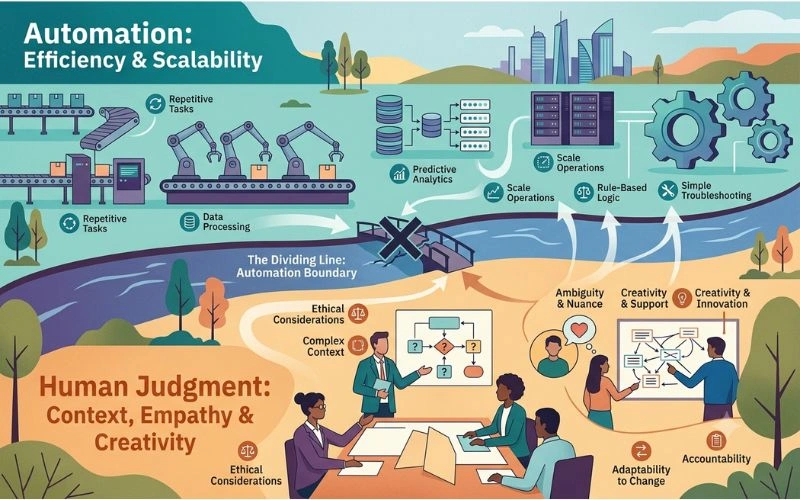
Where Automation Should Stop and Human Judgment Should Start
AI content planning tools are genuinely good at pattern recognition across huge datasets, but they have no sense of your brand’s actual expertise, no read on which topics your audience has already grown tired of, and no ability to sanity-check a trending keyword against whether it will still matter in six months. Treating every AI-suggested cluster as an automatic green light, without editorial review, is how publications end up chasing short-lived search spikes instead of building topics that compound over time.
● Always sanity-check high-volume clusters against your actual expertise
● Skip trending topics that don’t fit your site’s established authority
● Keep a human editor as the final approval step before scheduling
Connecting Keyword AI to Your Existing Editorial Stack
Most of the friction in adopting keyword AI has nothing to do with the AI itself or its integration. Teams already running low-code tools to manage editorial workflows will find that connecting a keyword AI platform’s API into that existing system, rather than bolting on a separate dashboard nobody checks, is what actually makes the automation stick. The same event-driven logic used to automate other parts of a publishing pipeline, discussed in this breakdown of low-code development and dynamic event handling, applies directly here: trigger a calendar update the moment a new high-priority cluster is flagged, instead of waiting for someone to check a dashboard manually.
KPIs That Prove the Automation Is Working
It’s worth tracking a handful of numbers before and after automating, so the investment isn’t just a feeling.
● Time spent per article on keyword research (should drop sharply)
● Percentage of published articles ranking in the top 20 within 90 days
● Number of low-competition clusters identified per month
● Editorial backlog size (should shrink, not grow)
If none of these numbers move after a few months, the tool or the workflow around it needs adjusting.
Frequently Asked Questions
Is AI content planning the same as AI content writing?
No. AI content planning researches, clusters, and prioritizes topics using keyword AI, while a separate human writer or tool still drafts the actual article afterward.
Can small blogs benefit from content planning automation, or is it only for large teams?
Small blogs benefit too. A single mid-tier keyword AI tool keeps a solo writer’s monthly calendar full without paying for enterprise features they will never use.
How often should an automated content calendar be refreshed?
Weekly reviews work best for most teams. Search trends shift fast enough that a monthly-only refresh lets winnable, low-competition topics slip past unnoticed for weeks.
Do keyword AI tools replace the need for manual SEO validation?
No, they don’t. Always cross-check AI-suggested difficulty scores in a tool like Ahrefs, SEMrush, or Ubersuggest before committing real editorial time to any topic.
What’s the biggest mistake teams make when automating content planning?
Treating every AI-flagged keyword as an automatic green light, instead of filtering each suggestion through actual brand expertise, audience fit, and long-term topical relevance.