Cities are under pressure, energy demand is spiking, grids are straining, and the push for renewables has exposed one uncomfortable truth: the sun doesn’t always shine, and the wind doesn’t always blow. That’s why engineers and urban planners are turning to one of physics’ oldest tricks: gravity. Gravity batteries for urban energy storage are no longer science fiction. They’re being deployed right now, and they could redefine how cities power themselves.
What Is a Gravity Battery, and How Does It Work?
At its core, a gravity battery is elegantly simple. You use surplus electricity, say, from solar panels at noon to lift a heavy mass: a concrete block, a water reservoir, or even a repurposed mine elevator. Then, when energy demand surges in the evening, that mass descends, driving a generator and releasing stored energy back into the grid. The cycle repeats indefinitely, with minimal chemical degradation.
- No toxic chemicals or rare earth minerals required
- Mechanical components are durable and well-understood
- Round-trip efficiency typically ranges between 75–85%
- Lifespan of 30–50 years with low maintenance overhead
This is gravitational energy storage in its purest form. Unlike lithium-ion batteries, there’s no capacity to fade over charge cycles. The physics stays constant as long as gravity does.
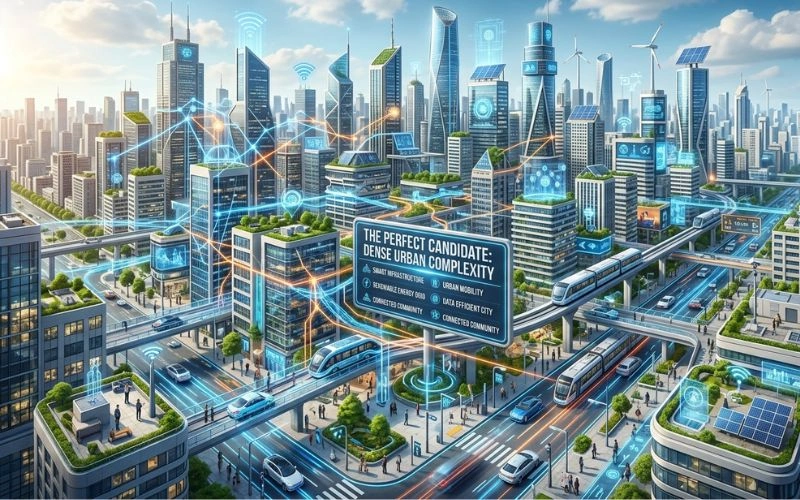
Why Cities Are the Perfect Candidate for This Technology
Urban environments offer something rural landscapes can’t: vertical space. Skyscrapers, underground tunnels, repurposed mine shafts beneath city suburbs, and even multi-story parking structures are all viable housing for gravity-based energy systems. What seemed like a logistical nightmare a decade ago is now a genuine opportunity.
The case for deploying gravity batteries for urban energy storage becomes even stronger when you look at grid stress patterns. Cities consume 75% of global energy, and their peak demand windows early mornings and early evenings rarely align with peak renewable generation. Gravity systems can bridge that mismatch, storing cheap renewable energy and dispatching it exactly when needed.
This connects naturally to a broader shift happening across the tech landscape. As explored in MindScribes’ coverage of smart grid technologies in South Asian markets, the gap between renewable generation and urban consumption is one of the defining infrastructure challenges of our era. Gravity storage is emerging as one of the most geographically flexible answers.
The Real-World Systems Already in Operation
It’s tempting to treat gravity batteries as theoretical but several systems are already operational or under construction worldwide.
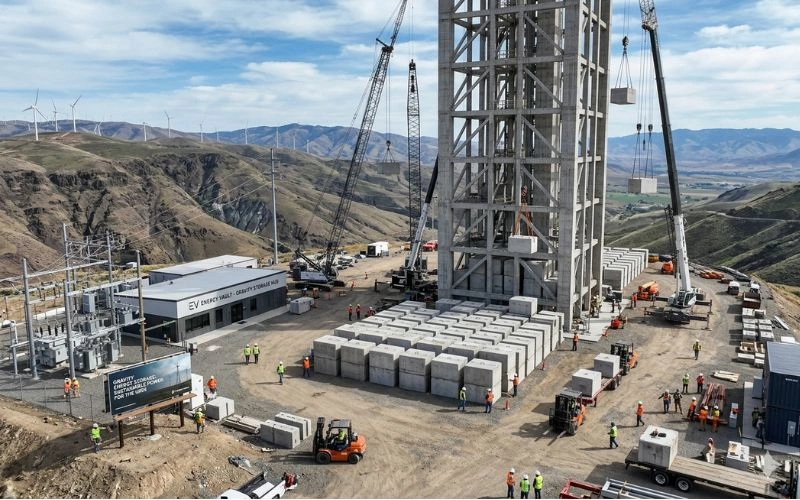
Energy Vault (Switzerland/USA): This company uses crane-based systems to stack 35-tonne concrete blocks up to 120 metres high. Their EVx platform is now commercially deployed, with projects in multiple countries delivering hundreds of megawatt-hours of storage capacity.
Gravitricity (Scotland): Using decommissioned mine shafts, Gravitricity drops weights of up to 12,000 tonnes down vertical shafts to generate electricity. Their pilot project in Edinburgh demonstrated 250 kW output from a 15-metre test shaft.
ARES (Advanced Rail Energy Storage, USA): This system uses heavy electric rail cars on an inclined track, charging uphill when energy is cheap and descending to regenerate power. Their Nevada project connects directly to the grid.
These are not prototype experiments, they’re commercial-scale deployments proving the economic and technical viability of urban and peri-urban gravity energy storage.
How Gravity Batteries Compare to Lithium-Ion
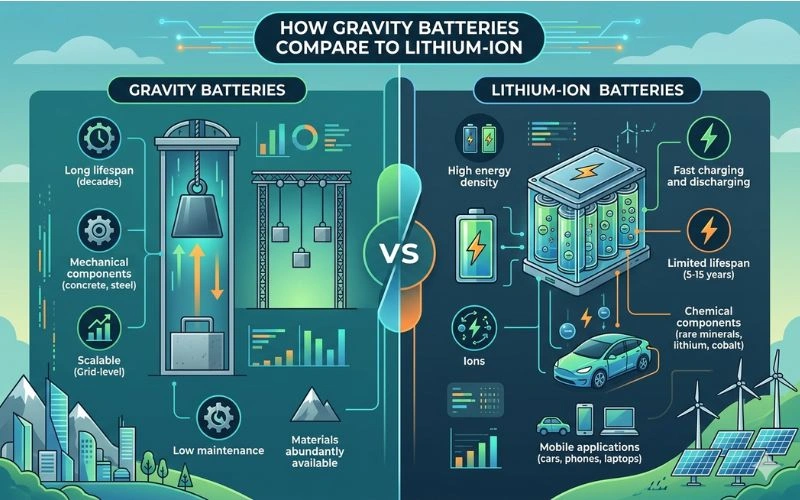
Choosing the right storage technology isn’t black and white. Gravity and lithium-ion serve different niches, and smart grid planning often uses both.
Lithium-ion batteries excel at rapid discharge and compact installations. They’re ideal for short-duration, high-power needs like smoothing a 30-second voltage spike. Gravity systems, by contrast, are better suited to multi-hour discharge cycles, where their low degradation and zero-fire-risk profile become major advantages.
For cities with long-duration renewable integration goals, gravitational energy storage systems win on lifecycle cost. A lithium battery pack needs replacement roughly every 10–15 years. A gravity system with well-maintained mechanical components can outlast the building it’s installed in. This is precisely the kind of long-horizon infrastructure thinking that sustainable urban planning demands.
The parallel to other frontier energy research is striking. MindScribes has explored similar long-horizon thinking in artificial photosynthesis for decentralized energy systems, where the goal is matching energy production to demand in radically new ways. Gravity storage shares that ambition just through mechanical rather than chemical means.
The Urban Planning Angle: Where Gravity Storage Fits
Urban installation is where gravity energy storage gets genuinely creative. Here are four realistic deployment scenarios:
Repurposed high-rise buildings: Vacant or under-used upper floors of tall buildings can house stacked mass systems. The building’s own elevator shafts or structural cores become the “battery.”
Underground urban mines: Many cities sit atop old mine networks. Edinburgh, Johannesburg, and parts of Appalachian cities in the USA have shafts that could host Gravitricity-style systems with minimal new construction.
Multi-story car parks: With EV adoption reducing parking demand in some cities, multi-deck structures are being eyed for gravity storage retrofits of stacked concrete blocks replacing rows of cars.
Water towers and reservoirs: Pumped hydro is the oldest form of gravity storage, and urban water infrastructure already includes elevated reservoirs that could be integrated into smart energy networks.
Each scenario makes gravity storage less of an add-on and more of an embedded feature of city infrastructure which is exactly how sustainable urban design should work.
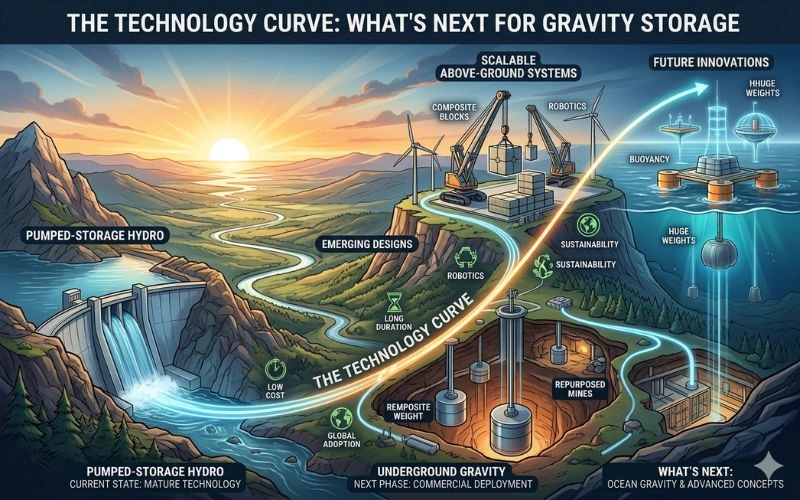
The Technology Curve: What’s Next for Gravity Storage
The field is moving fast. Current research directions include:
- Composite weight materials using recycled construction waste or sand-filled containers, reducing cost while keeping mass density high
- AI-driven dispatch systems that predict renewable generation curves and pre-position masses at optimal heights 24–48 hours in advance
- Underground shaft drilling innovations that make it economically viable to sink new shafts in urban areas, rather than relying solely on repurposed mines
- Modular unit designs that can be scaled from a 100 kWh rooftop installation to a 10 MWh city district system
The convergence of better materials science, smarter software, and cheaper renewable power is making the economics increasingly compelling. Projects that seemed marginal at $80/MWh solar are now genuinely profitable at $20/MWh.
That software layer matters enormously. Technologies like wireless energy transfer for home-scale charging and memristor-based neuromorphic chips in edge AI are part of the same intelligent infrastructure ecosystem that gravity batteries will plug into systems that don’t just store energy, but anticipate, route, and optimize it in real time.
Environmental and Social Benefits for Urban Communities
Beyond engineering, gravity batteries carry a meaningful social dimension. Cities in the Global South where grid unreliability is a daily reality stand to gain enormously from storage systems that don’t require rare minerals, sophisticated supply chains, or specialized chemical handling.
A gravity battery built with locally sourced concrete and steel creates local jobs in construction, maintenance, and operation. It doesn’t produce toxic waste at the end of life. And because the physics is transparent people intuitively understand that a weight can store energy community acceptance tends to be higher than for chemical battery projects.
For urban residents dealing with energy poverty or unreliable supply, a locally controlled gravity storage system can mean the difference between hours of productive activity and hours lost to outages. This is clean energy with genuine equity implications.
Challenges That Still Need Solving
It would be dishonest not to address the real hurdles. Gravity storage faces genuine obstacles that the industry is still working through.
Space is the most obvious. Urban land is expensive. A system that requires a 200-metre shaft or a massive crane footprint competes with housing, commercial, and green space needs. Compact designs are improving, but density remains a constraint.
Response time is another. Some gravity systems take minutes to reach full power output slower than lithium batteries, which can respond in milliseconds. For applications requiring ultra-fast grid frequency response, chemical storage still has the edge.
Permitting and zoning add friction. Installing heavy mechanical systems in urban buildings requires navigating building codes, planning permissions, and grid interconnection agreements processes that can add years to project timelines.
None of these are insurmountable. But they explain why gravity storage is complementary to rather than a complete replacement for other clean energy technologies.
A Realistic Picture of the Gravity Storage Market
Market analysts estimate the global long-duration energy storage market will exceed $300 billion by 2035, with gravity-based systems capturing a meaningful share. The key drivers are falling renewable costs, government grid decarbonization mandates, and rising awareness that chemical batteries alone can’t provide the multi-hour storage that a 100% renewable grid requires.
Cities that plan now to integrate gravity storage into their infrastructure investment cycles will have a significant advantage. Those that wait will face higher costs and more complex retrofitting challenges as grids evolve rapidly around them.
The trajectory is clear. Just as lithium-sulfur batteries are reshaping electric vehicles by offering greater energy density per kilogram, gravity systems are reshaping grid storage by offering greater longevity and environmental simplicity per megawatt-hour. Both innovations point toward the same destination: a world where clean energy is stored efficiently and reliably at every scale.
What This Means If You’re Thinking About Energy Resilience
Whether you’re a city planner, a building developer, a sustainability consultant, or simply a curious urban resident, gravity batteries are worth understanding not as a distant future technology, but as an actively deployable solution.
For city planners, the task is to include long-duration storage assessments in infrastructure reviews and to create zoning pathways for mechanical storage installations.
For developers, the opportunity is in multi-story buildings and mixed-use schemes where embedded storage can create energy revenue streams.
For communities, the value is in pushing for locally controlled, locally maintained energy assets that don’t depend on global mineral supply chains.
The tech category at MindScribes regularly covers the intersection of energy, infrastructure, and digital systems and gravity storage sits right at that crossroads. If you’re navigating energy choices for a building, a neighborhood, or a city, the conversation is worth having now.
Frequently Asked Questions
Q1: Can gravity batteries power an entire city on their own?
Currently, they work best as part of a hybrid grid alongside solar, wind, and other sources. Gravity storage excels at multi-hour balancing, while other technologies handle peak rapid-response needs across the full city demand profile.
Q2: Are gravity battery installations expensive compared to lithium-ion systems?
Upfront costs are higher, but lifetime costs are often lower due to a 30–50 year lifespan and no degradation. Over a 20-year horizon, gravity systems frequently offer better cost per megawatt-hour than chemical battery alternatives.
Q3: How safe are gravity batteries in densely populated urban areas?
Very safe. There are no flammable chemicals, no explosion risk, and no toxic leakage. The primary safety consideration is structural integrity, ensuring the mass system is engineered to building codes, which is well-understood in civil engineering.
Q4: Do gravity batteries work in cities without old mines or tall buildings?
Yes. New shaft drilling, modular crane systems, and inclined rail designs mean gravity storage can be adapted to a wide range of urban geographies. The technology is becoming increasingly site-flexible as engineering advances continue.
Q5: How does gravity storage support the renewable energy transition in practical terms?
It stores cheap renewable energy when supply exceeds demand such as midday solar and overnight wind and releases it during peak consumption hours. This firming of intermittent renewables makes a fully clean urban grid far more achievable and economically viable.