When major disasters strike whether earthquakes, floods, hurricanes, or large-scale accidents one of the first systems to fail is communication. Without stable connectivity, rescue teams struggle to coordinate, emergency services cannot operate efficiently, and survivors cannot reach help. In recent years, drone-based communication networks for disaster recovery have emerged as a powerful solution to restore connectivity rapidly, safely, and cost-effectively.
This technology represents the future of emergency communication infrastructure, combining aerial mobility, intelligent networking, and real-time data transmission to support life-saving operations.
Why Communication Fails During Disasters
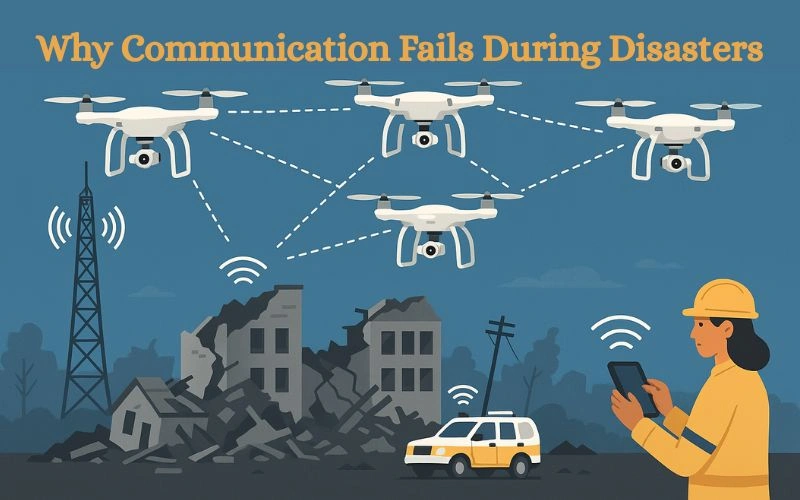
Before understanding the role of drones, it’s important to recognize why communication systems collapse during emergencies:
- Ground towers get damaged or destroyed
- Power shortages disrupt networks
- Flooding or debris blocks traditional communication lines
- Remote areas lack infrastructure even before a disaster
- Heavy traffic overloads existing systems
This breakdown severely affects decision-making, rescue coordination, and public safety. That’s where drone-based communication networks for disaster recovery become indispensable.
How Drone-Based Communication Networks Work
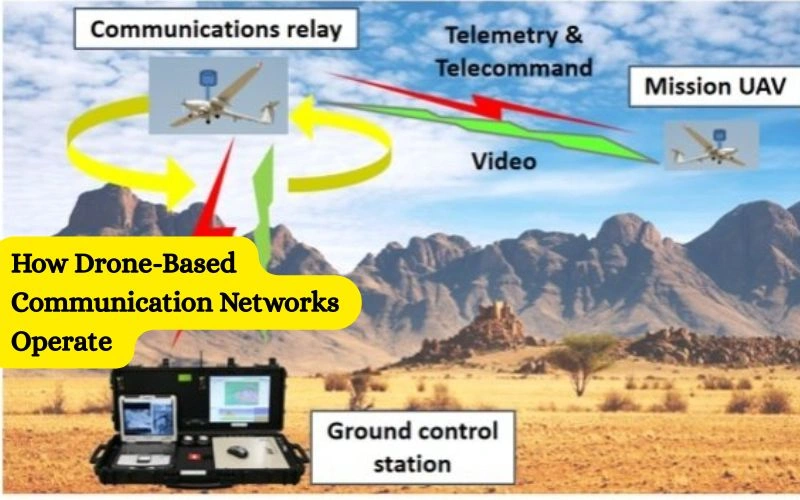
Drones designed for emergency communication carry lightweight networking equipment such as repeaters, mobile signal boosters, or Wi-Fi/LTE modules to create temporary communication coverage.
Key Components of Drone-Based Networks
- High-altitude drones: Provide wide coverage for long-duration missions
- Low-altitude drones: Support local, targeted rescue operations
- Mesh networking: Multiple drones interconnect to build a resilient communication web
- AI-powered routing: Ensures efficient data distribution across affected zones
In disaster-stricken regions, drones function as flying cell towers or Wi-Fi hotspots, enabling instant and scalable communication.
Benefits of Drone-Based Communication Networks for Disaster Recovery
Leveraging Drone-Based Communication Networks for Rapid and Reliable Disaster Recovery.
1. Rapid Deployment
Drones can be launched within minutes, unlike repairing damaged cell towers or transporting heavy communication equipment. This speed is crucial for the early hours of a disaster.
2. Wide Coverage in Remote Areas
Dense forests, mountains, flooded terrain, or collapsed urban zones often block access. Drones can hover above these obstacles and easily provide connectivity where traditional networks fail.
3. Cost-Effective Emergency Solution
Rebuilding physical infrastructure is expensive and time-consuming. Using drones drastically reduces operational costs while maintaining high efficiency.
4. Safe Support for Rescue Teams
Instead of sending humans into dangerous areas, drones can:
- Assess network damage
- Maintain communication links
- Guide rescue teams using real-time aerial visuals
This transforms rescue operations into safer, more coordinated missions.
5. Flexible and Scalable Networks
Multiple drones can work together to form mesh networks expanding or shrinking coverage based on the situation. This adaptability makes drone-based communication networks for disaster recovery ideal for unpredictable emergency environments.
Real-World Applications in Disaster Response
Drone technology is increasingly used in disaster response to restore communication, assess damage, and support search-and-rescue operations.
Restoring Mobile Connectivity
After earthquakes or hurricanes, drones can act as temporary cell towers, restoring LTE/5G coverage for affected populations.
Supporting Search and Rescue Teams
Rescue operations rely heavily on communication for:
- GPS tracking
- Mapping affected zones
- Emergency dispatch
- Data transfer
Drones keep teams connected even when everything else fails.
Providing Internet for Emergency Shelters
Evacuation centers often lack stable connectivity. Drone networks can deliver essential internet access to:
- Coordinate supply chains
- Facilitate medical teleconsultations
- Help families communicate
Live Monitoring and Surveillance
Drones can capture high-resolution images and send them instantly to command centers, aiding in:
- Damage assessment
- Hazard detection
- Evacuation planning
Challenges and Future Enhancements
While drone communication systems are highly promising, some challenges remain:
Battery Limitations
Most drones have limited flight times, though solar-powered and tethered drones are emerging solutions.
Weather Vulnerability
Extreme winds or heavy rainfall can affect aerial stability, but upcoming rugged drone designs aim to solve this.
Regulatory Restrictions
Airspace laws vary worldwide, requiring coordinated policies to unlock the full potential of drone-based communication networks for disaster recovery.
Future Advancements
- AI-driven autonomous fleets
- 5G-equipped ultra-long-endurance drones
- Integration with satellite communication
- Swarm intelligence for large-area coverage
These innovations will make drone networks even more reliable and indispensable during emergencies.
Conclusion
As the world faces increasing natural and man-made disasters, the need for resilient communication systems becomes more urgent. Drone-based communication networks for disaster recovery offer a revolutionary way to restore connectivity, support rescue teams, and save lives. Their ability to move rapidly, scale efficiently, and operate in dangerous or remote locations positions them as one of the most impactful technologies in modern disaster management.
If you’re looking to develop high-quality, human-written technical content like this, or need expert writing support for your next project, explore more at MindScribes
FAQs
1. What are drone-based communication networks for disaster recovery?
Drone-based communication networks for disaster recovery are advanced aerial systems where specially equipped drones carry mobile, Wi-Fi, or LTE/5G networking hardware to re-establish connections.
2. How fast can drones restore communication systems?
Drones can restore communication systems extremely quickly because they require no physical infrastructure setup. After deployment, they can reach disaster zones within minutes, hover above affected areas, and instantly activate communication modules.
3. Are drone networks cost-effective for disaster response?
Yes, drone-based communication networks are highly cost-effective for disaster response. They eliminate the need for expensive reconstruction of damaged towers, reduce manpower requirements, and minimize operational delays.
4. Can drones provide 5G connectivity?
Modern emergency-response drones are capable of carrying compact LTE and 5G communication modules. These airborne systems deliver high-speed, low-latency connectivity essential for real-time data transfer, rescue coordination, and surveillance.
5. Do weather conditions affect drone operations?
Weather conditions can impact drone operations since heavy rainfall, strong winds, and extreme temperatures may reduce stability or flight duration. However, many disaster-response drones are designed with rugged materials, enhanced stabilization systems.